How to Choose Socks for Long Walks
Good walking socks should fit smoothly inside your shoes without bunching or making them too tight. Material matters, but so do thickness, seams, and heel placement. No fabric guarantees blister-free walking, so test the complete shoe-and-sock combination before a longer outing.
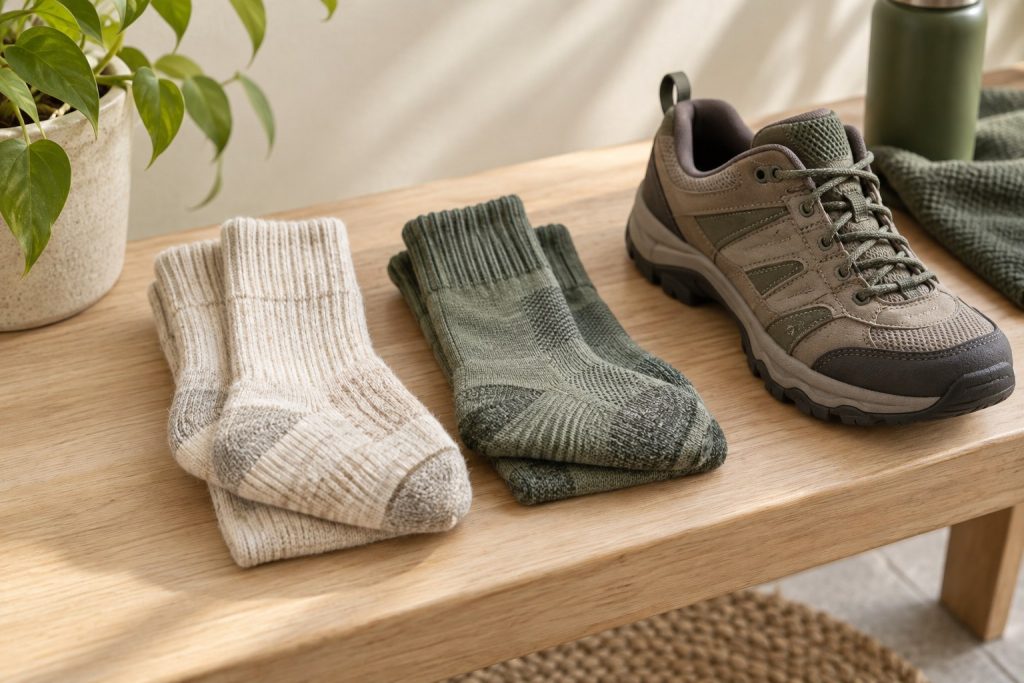
Wool, synthetic, or cotton?
Wool blends and synthetic fabrics are common choices for active socks. REI’s guide notes that cotton holds moisture and dries slowly. Read the full fabric blend rather than judging by a single word on the label. Warmth, drying behavior, and personal comfort can vary between socks made from similar materials.
How much cushioning fits your shoes?
Extra padding takes up space. A thick sock can make a previously comfortable shoe feel cramped, while a very thin one may change how securely it fits. Try the intended socks when checking footwear. Compare cushioning under the heel and forefoot rather than assuming that thicker is always more comfortable.
Check the heel and toe seams
Choose the size range that fits your feet and check where the shaped heel sits. Smooth out folds before walking. A bulky seam or sliding sock is worth addressing early rather than ignoring for the whole route. The cuff should stay in place without feeling uncomfortably tight.
Test and care for the pair
Start with a shorter walk and notice any rubbing or dampness. For a long outing, a dry spare pair may be useful. Wash and dry the socks according to their label, and replace pairs with worn patches or lost shape. Socks can improve a setup, but they cannot make an unsuitable shoe fit properly.
Sources
REI.
Related reading
Wide vs Regular Walking Shoes: How to Check the Fit
Hiking vs. Walking: What Changes When You Leave the Pavement?
Related reading
Hiking Boots vs Trail-Running Shoes for a Day Walk
Related reading
How to Wash a Merino Base Layer Without Guessing
Related reading
About this article: an introductory editorial draft. Not yet independently reviewed by a fitness professional.