Canned vs. Frozen Vegetables: A Practical Shopping Guide
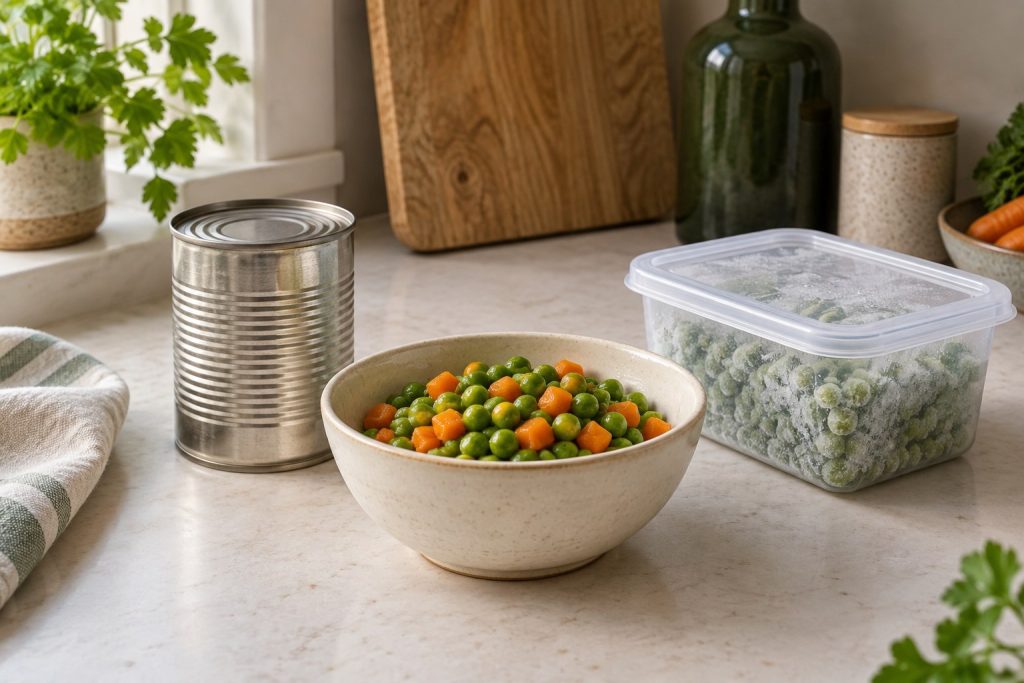
Canned and frozen vegetables can both make meals easier to assemble. The useful comparison is between the actual products: the vegetables, added ingredients, storage needs, and portion you will use. Packaging alone does not tell you which option best fits your kitchen or the rest of your meal.
What should you compare on the label?
Look for the same vegetable first, then compare ingredients and sodium or salt on an equal portion basis. Check whether butter, sauce, or seasoning is included. MyPlate encourages using food labels when choosing packaged vegetables. A plain frozen product and a heavily seasoned canned mixture are not a comparison of preservation methods alone.
Which format makes portioning easier?
A resealable frozen bag may let you remove what you need while keeping the rest frozen according to the instructions. With a can, plan for the remaining contents after opening. Compare usable drained quantity where relevant, not just the total package weight. The most economical package is not useful if a large part goes unused.
Are frozen vegetables ready to eat without cooking?
Do not assume so. Follow the package’s cooking directions and any warnings; frozen does not automatically mean ready to eat. Canned products also have their own directions for use and storage after opening. Keep preparation instructions when decanting, and use clean containers and utensils rather than guessing from the vegetable’s appearance.
How do you choose for a busy week?
Match the product to the dish: consider the texture you want in a soup, side dish, or stir-fry. Check freezer space, pantry space, and the time available. It can be practical to keep both formats. Compare cost per portion you will actually eat and include additions such as oil or sauce when assessing the complete meal.
Sources
USDA MyPlate — planning and food labels; Food Standards Agency — cooking instructions.
Related reading
Frozen vs. Fresh Vegetables: Choose What You Will Use
Canned vs. Dried Beans: Compare Convenience, Sodium, and Cost
Related reading
Fresh vs Frozen Berries: Buying, Texture, and Storage
Related reading
Passata vs Chopped Tomatoes: Texture, Labels, and Substitutions
Related reading
Green Peas vs Green Beans: Different Vegetables, Different Uses
Related reading
About this article: an introductory editorial draft. Not yet independently reviewed by a fitness professional.