Rolled Oats vs. Steel-Cut Oats: Texture, Time, and Portions
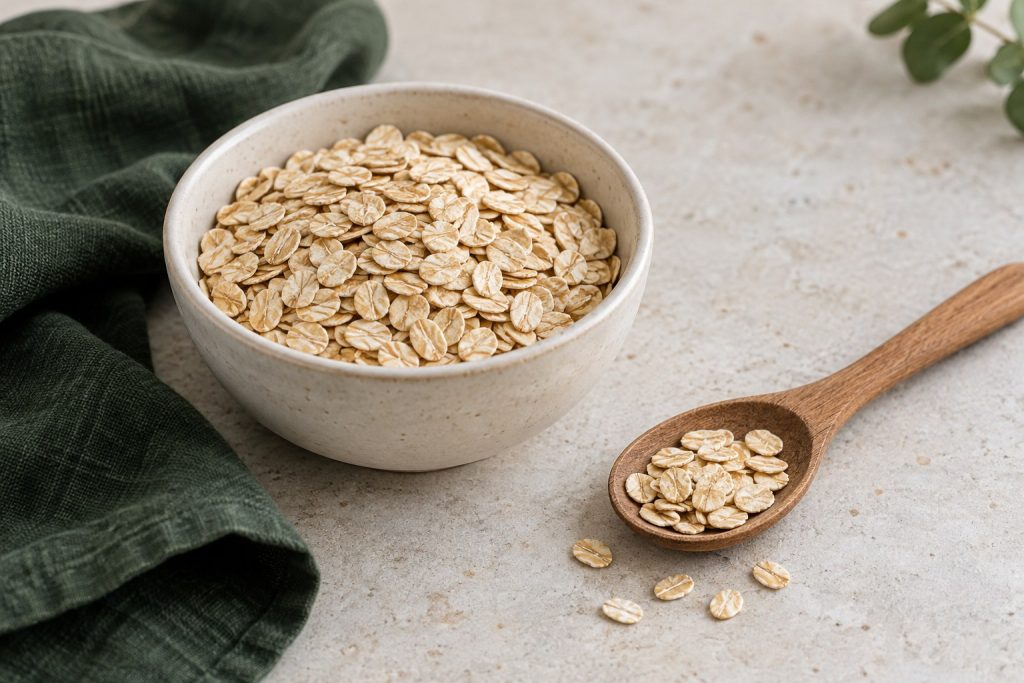
Rolled oats are flattened into flakes; steel-cut oats are chopped pieces of the oat kernel. Their shape affects texture and preparation, but neither name tells you the complete contents of a flavored product. Compare plain versions first, then choose the form that suits your recipe and routine.
Why do they cook differently?
Flat flakes and compact pieces absorb water differently. Harvard’s oat guide describes these processing differences. Follow the cooking instructions on the actual package, because quick-cooking variants also exist. Do not assume that switching the same volume of one type into a recipe will preserve its cooking time or texture.
How should you compare portions?
Compare dry weight with dry weight, then account for what you add. A bowl of cooked oats includes absorbed water or milk, so equal cooked weights may contain different amounts of dry oats. A larger-looking bowl is not automatically more oats. Use the label and recipe quantities rather than judging the serving by volume alone.
What should you check on the label?
Look at the ingredient list, serving weight, fiber, and any added sugar information. Plain oats and a sweetened flavored sachet are different products even if both use rolled oats. Include milk, yogurt, nuts, or fruit when considering the whole breakfast. A processing term is not a complete description of the meal.
Which is easier to use regularly?
Choose according to available preparation time and the texture you enjoy. Keep the package instructions when transferring oats to a storage container. For batch preparation, follow appropriate cooking, cooling, and refrigerated-storage guidance. If you must avoid gluten, choose a product meeting your dietary requirements rather than assuming every oat product is suitable.
Sources
Harvard Nutrition Source — oats.
Related reading
Whole Grains vs. Refined Grains: Read Past the Package Color
How to Use the Tare Button on a Kitchen Scale
Related reading
Couscous vs. Quinoa: Ingredients, Cooking, and Portions
Related reading
Chia Seeds vs Flaxseed: Preparation and Portions
Related reading
Muesli vs Granola: Ingredients, Crunch, and Breakfast Portions
Related reading
Quick Oats vs Instant Oatmeal: Read Past the Cooking Time
Related reading
About this article: an introductory editorial draft. Not yet independently reviewed by a fitness professional.