Why Are Some Dried Apricots Orange and Others Brown?
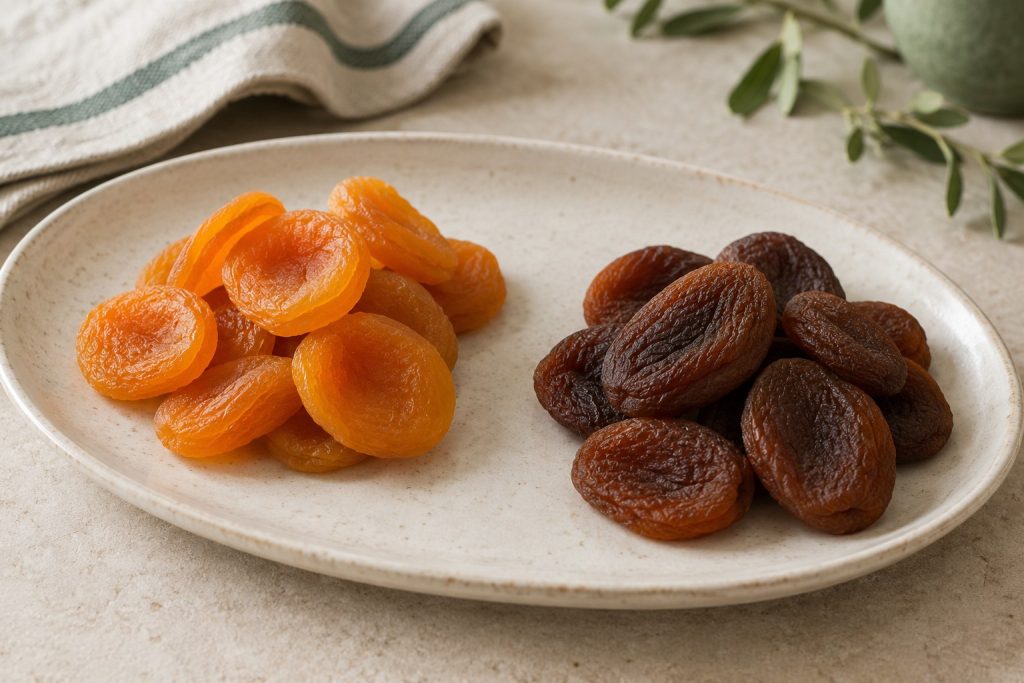
Bright orange and brown dried apricots can reflect different processing choices. Some producers use sulfur dioxide to help preserve the fruit and its color; unsulfured apricots commonly turn brown. Color alone is not a nutrition ranking or a freshness test.
Read the ingredients for the processing clue
Sun-Maid lists sulfur dioxide as a preservative in its California dried apricots. Made in Nature describes its unsulfured apricots as naturally brown. These are product examples, not a rule that identifies every apricot by sight. Read the package when you need to know whether sulfites are present.
Brown does not automatically mean spoiled
Expected browning in an unsulfured product is different from a reason to assume the food has gone bad. But the reverse is also important: normal-looking color cannot establish that fruit is safe to eat. Follow the package’s storage instructions and do not use color as your only check.
Compare the actual product and portion
Read the ingredients for added sweeteners and use the nutrition panel for the amount you eat. Naturally occurring sugar and added sugar are different label concepts. Neither orange nor brown automatically means lower sugar, fewer calories or a better fit for your meal.
Let the recipe guide preparation
For baking, chopping or soaking depends on the particular recipe and the fruit’s texture. Choose the form requested, then follow that preparation. A darker color by itself does not call for a different soaking time or an automatic change in the amount of fruit.
Sources
Related reading
About this article: an introductory editorial draft. Not yet independently reviewed by a fitness professional.