White, Red or Black Quinoa: Choose the Texture You Want
White, red and black quinoa are sold separately or blended. Color can help you anticipate the cooked texture, but it does not replace the package instructions. Tri-color quinoa is a blend, not a separate cooking method.
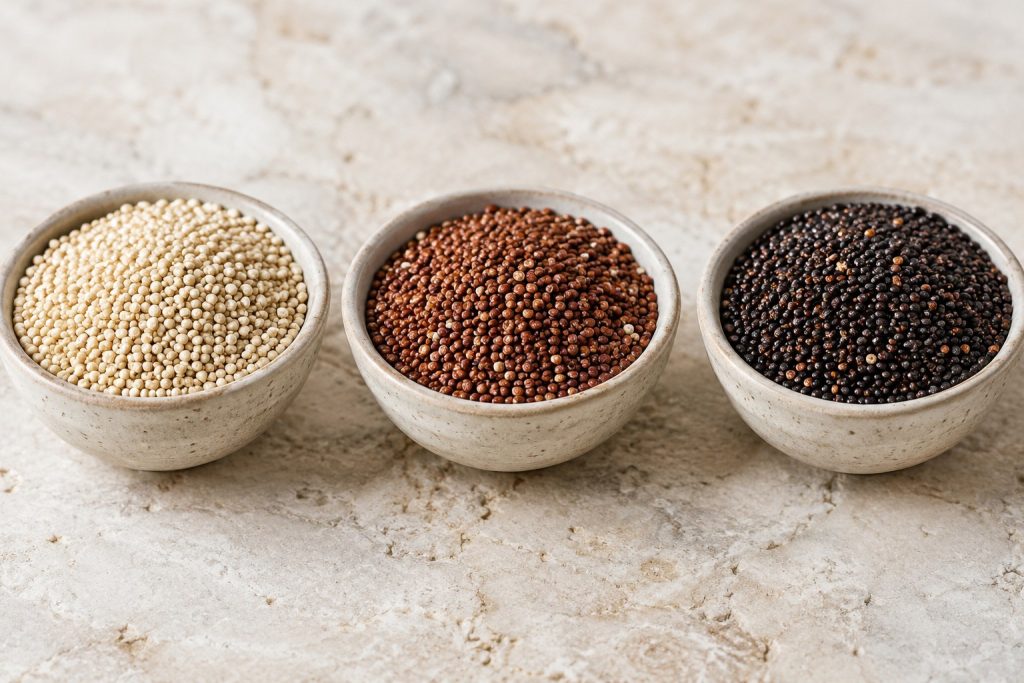
Use texture descriptions as a guide
Bob’s Red Mill describes white quinoa as lighter and fluffier, red as chewier, and black as retaining more texture. These are useful culinary descriptions rather than guarantees for every product or cooking time. Choose the texture that fits your meal.
Check the blend before cooking
A mixed package combines different colors in the same pot. Follow its liquid and cooking directions rather than applying a timing rule based only on the darkest seed. Taste for the intended tenderness before serving.
Keep dry and cooked amounts separate
If a recipe asks for cooked quinoa, do not measure the same amount dry and assume it is equivalent. Cooking changes the volume and weight. Match the recipe’s stated form when comparing portions or replacing another grain-like ingredient.
Read added ingredients separately
Plain quinoa, a seasoned pouch and a ready-made salad are different foods. Compare their labels and actual portions rather than declaring a color the healthiest. If you want a predictable substitution, start with plain quinoa and a recipe suited to it.
Sources
Bob’s Red Mill; Bob’s Red Mill.
Related reading
About this article: an introductory editorial draft. Not yet independently reviewed by a fitness professional.