Wheel-On vs Direct-Drive Bike Trainers: What Changes?
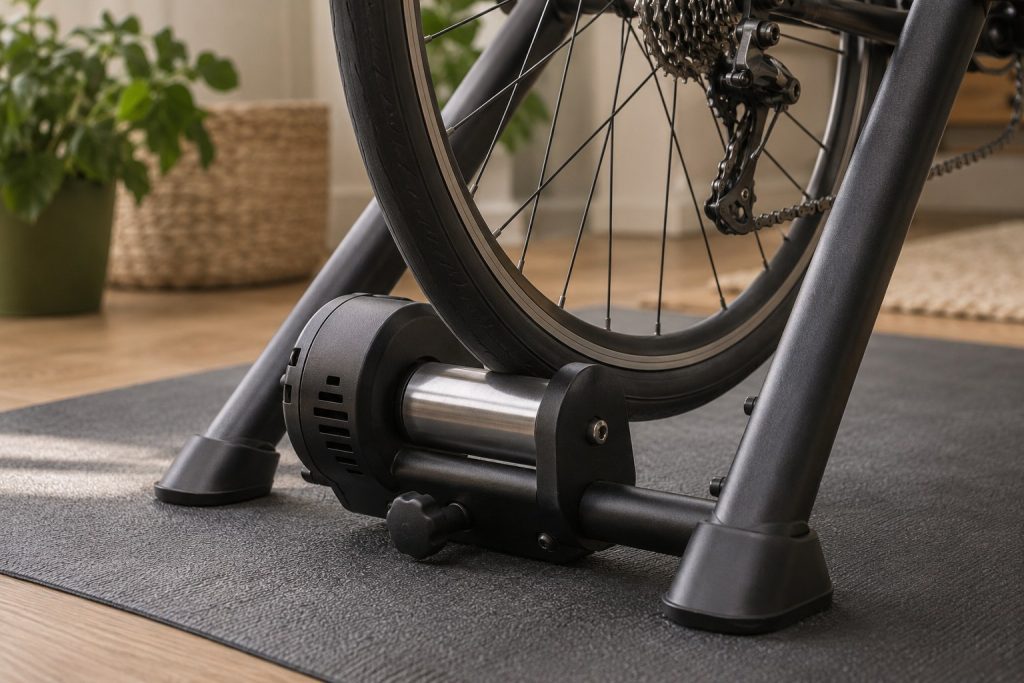
A wheel-on trainer keeps the bicycle’s rear wheel in place and presses a roller against the tire. A direct-drive trainer replaces the rear wheel, connecting the bicycle’s drivetrain to the trainer instead.
Check the attachment before the features
Both designs need the correct bicycle fit. Check the trainer’s compatibility list for your frame, axle type and required adapters. A trainer being described as universal is not enough to confirm that your particular bicycle fits.
Wheel-on means tire contact
The tire drives the roller, so setup includes the manufacturer’s tire-pressure and roller-tension instructions. Tire condition matters too. Follow that model’s calibration guidance instead of copying a pressure or adjustment from a different trainer.
Direct drive adds drivetrain checks
Removing the rear wheel eliminates the tire-to-roller contact. You still need a compatible cassette or supported cog arrangement, axle hardware and frame clearance. Check what is included rather than assuming the trainer is ready for your bicycle.
Separate mounting style from smart features
Wheel-on versus direct drive describes the mechanical connection. App control, power reporting and calibration requirements are separate specifications. Compare those details alongside storage space and setup effort; neither mounting style guarantees a better workout by itself.
Sources
Related reading
Bike Tire Pressure: What to Check Before Pumping
Exercise Bike Watts vs Resistance: What Are You Actually Comparing?
About this article: an introductory editorial draft. Not yet independently reviewed by a fitness professional.