Water Aerobics for Beginners: What to Ask Before Your First Class
Water aerobics uses movements in a pool rather than continuous swimming lengths. Classes can involve walking, stepping, arm movements, and resistance equipment. Before booking, check water depth, required swimming ability, pool access, and whether the class welcomes beginners.
How does it differ from swimming laps?
Lap swimming involves traveling through the water using a stroke. Water aerobics often keeps participants within a class area, following an instructor’s movements. The exact format varies: shallow-water and deep-water classes are different experiences.
Cleveland Clinic’s aquatic-exercise overview includes water walking and group water aerobics alongside swimming. Water supports some body weight while also resisting movement. That can make the experience different from land exercise without making every class easy.
What should you ask the pool?
| Question | Why it matters |
|---|---|
| How deep is the class area? | You need to know whether you can stand. |
| What swimming ability is required? | A class label does not establish water safety. |
| How do participants enter and exit? | Steps, ladders, ramps, and lifts differ. |
| Is equipment supplied? | Buying gear before the first lesson may be unnecessary. |
Do you need foam dumbbells?
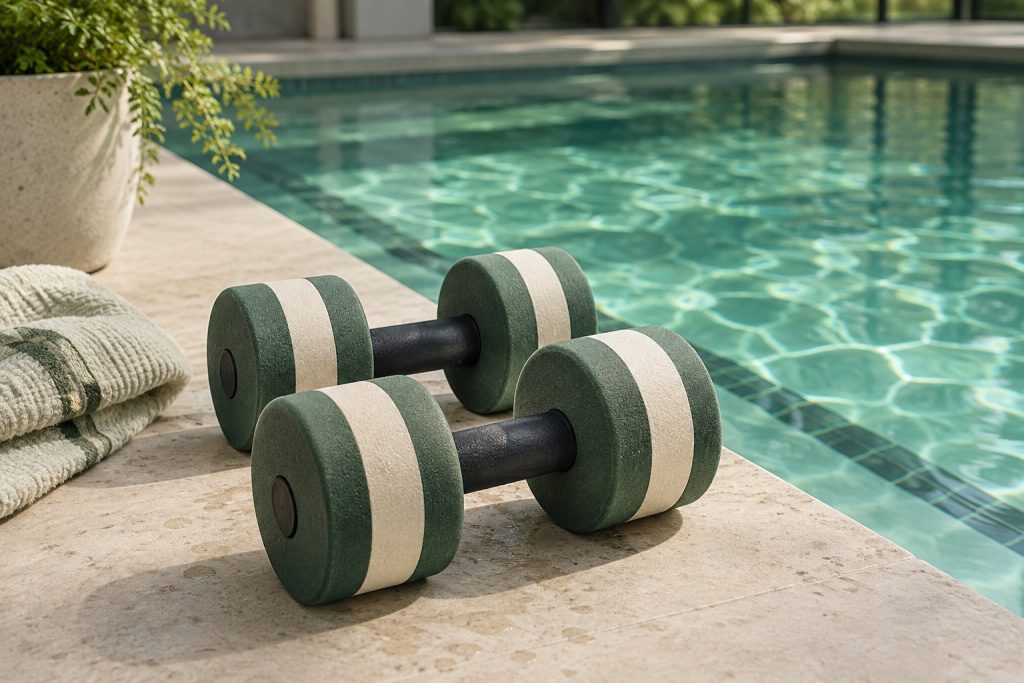
Not for every class. Follow the instructor’s equipment choices. Foam aquatic dumbbells behave differently from ordinary weights because buoyancy affects how they move in water. Do not bring land-training dumbbells into the pool as a substitute.
Ask about footwear, swimwear, towels, and changing facilities. Practical details can determine whether you arrive comfortably and on time, especially for an early-morning session.
How can you judge the effort?
Notice breathing and how demanding the movement feels rather than relying on visible sweat. Reduce the movement or pause when needed, and tell the instructor if something feels uncomfortable. The talk test offers one way to describe aerobic effort.
Record active class time separately from changing, waiting, and social time. A one-hour pool visit does not necessarily mean one hour of continuous exercise.
How do you choose between a class and swimming?
Consider your water skills, preference for instruction, schedule, and access. Compare beginner lap swimming and low-impact activity. If a health condition affects pool exercise, discuss appropriate participation before choosing a class.
About this article: an introductory editorial draft. Not yet independently reviewed by a fitness professional.