Tahini vs Peanut Butter: Flavor, Ingredients, and Substitutions
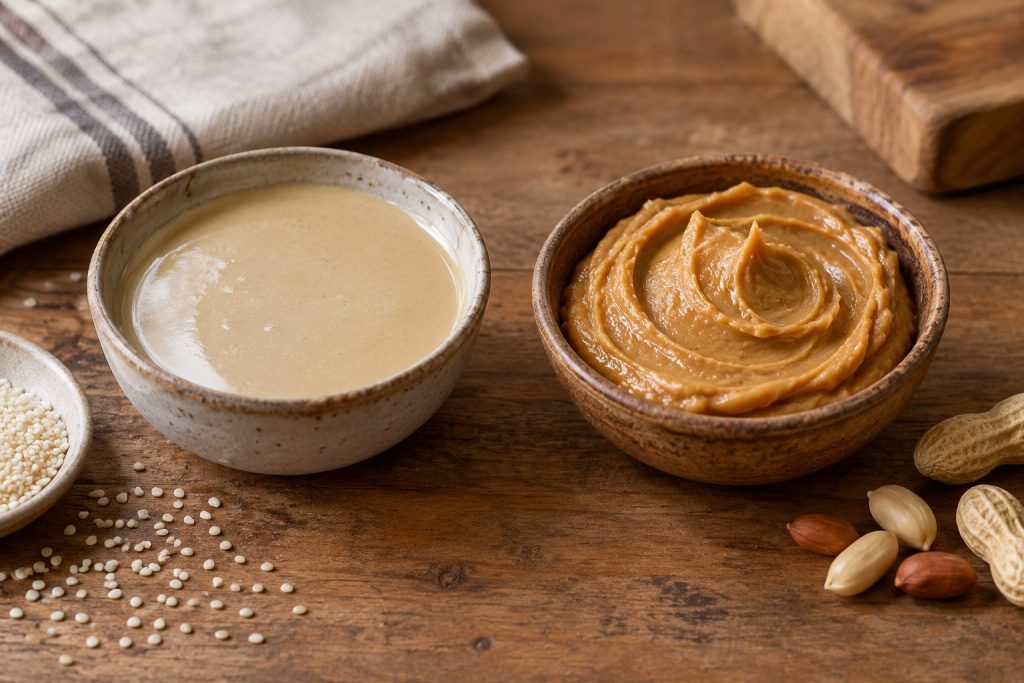
Tahini is a paste made from sesame seeds; peanut butter is made from peanuts. Their flavors, textures, and added ingredients can differ. Choose for the dish and the actual label rather than assuming that similar-looking spreads have identical nutrition or behave the same in a recipe.
Read beyond the main ingredient
Some products contain only the named seed or nut, while others include salt, sweeteners, or added oils. Compare like with like when possible. A sweetened flavored spread is a different product from plain tahini or plain peanut butter, even if the front label emphasizes the same ingredient.
Expect different flavor and consistency
Tahini has a distinctive sesame flavor and can be quite fluid; peanut butter may be thicker and tastes of peanuts. Individual brands vary. Oil separation can occur in some products: follow stirring and storage instructions rather than pouring away oil and assuming the label still describes the altered mixture.
Compare the amount you use
Use equivalent weights for a label comparison, then consider the portion in your sauce, toast, or dressing. A heaped spoon is not a consistent measure. Include added water, oil, sweetener, and other recipe ingredients when comparing the finished dish instead of judging the spread alone.
Substitute with the recipe in mind
A swap can change sweetness, thickness, and flavor. Start with a tested recipe if the result matters, especially in baking. Sesame and peanuts are distinct allergens; one is not automatically a suitable replacement for the other person’s needs. Check labels and storage directions for the exact jar.
Sources
Soom Foods; FDA; FDA.
Related reading
How to Compare Hummus: Ingredients, Protein, and Portions
Peanut Butter vs. Powdered Peanut Butter: How to Compare
Related reading
About this article: an introductory editorial draft. Not yet independently reviewed by a fitness professional.