Soft vs Firm Foam Rollers: Choose Comfort, Not Maximum Pressure
Choose a foam roller you can use comfortably and control. Firmness affects how much it yields under load, but surface texture, body position and the amount of weight you apply also influence pressure.
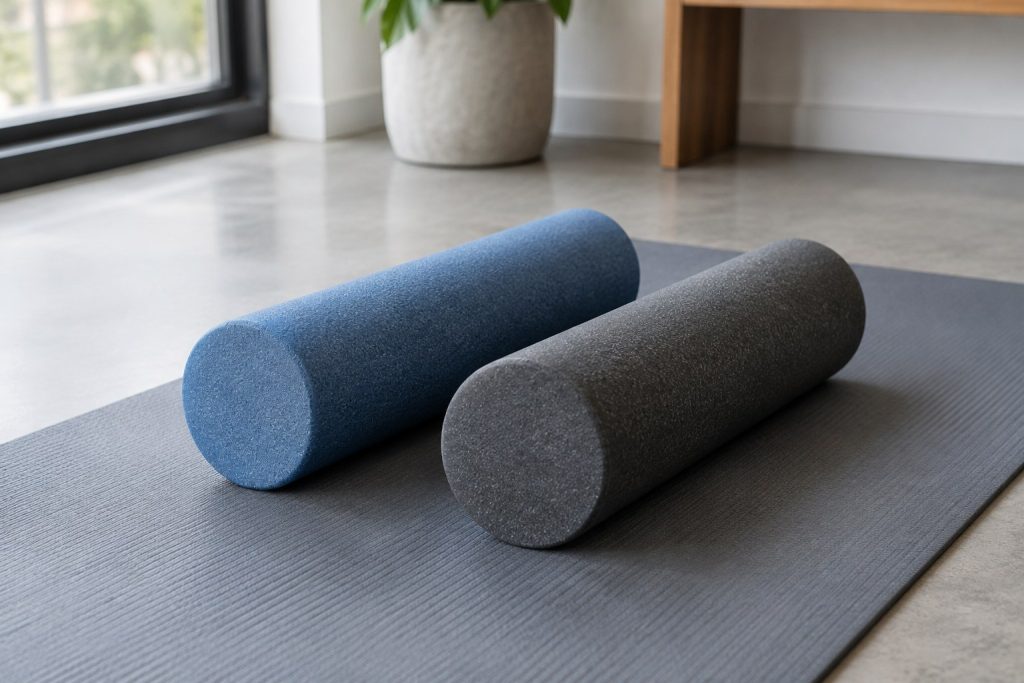
Firmness and texture are separate
A smooth roller can be firm, while a textured one is not necessarily harder throughout. Manufacturers use different materials and descriptions. OPTP, for example, sells soft and standard-density versions. Colors are not a universal firmness scale across brands.
Start with a manageable feel
If possible, try the roller gently before buying. A softer model may feel more forgiving, but that does not make every position suitable. More discomfort is not evidence that a session is more effective. Stop if use causes sharp pain, numbness or worsening symptoms.
Consider length and storage
A longer cylinder offers more room for some supported positions; a short roller is easier to carry. Check the dimensions required by the exercise instructions you follow. A compact travel roller is not automatically interchangeable with a full-length support roller.
Treat it as equipment, not treatment
Follow clear instructions and avoid improvising pressure over an injury. Seek individual guidance if pain is the reason you want to roll. Inspect the surface for cracks or collapse and clean it as directed. Firmness alone cannot establish a recovery benefit.
Sources
Related reading
Foam Rolling: What It Can Help With and What It Cannot
Yoga Mat vs. Exercise Mat: Choose for the Movements You Do
Related reading
About this article: an introductory editorial draft. Not yet independently reviewed by a fitness professional.