Short vs Long Swim Fins: Choosing a Pair for Pool Practice
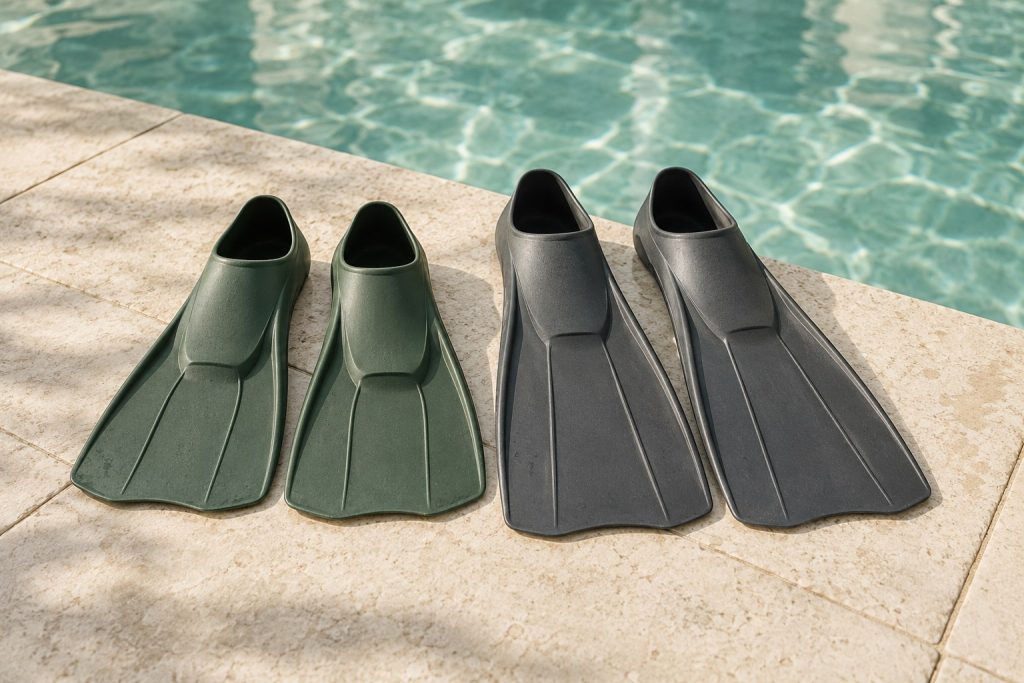
Short and long swim fins change how kicking feels, but blade length alone does not determine the best pair. Short training fins commonly suit quicker, smaller kicks; longer models have a different feel and purpose. Choose a swimming fin for the drill, fit, and pool rules.
Start with the session’s purpose
Ask your instructor which fin style suits the planned drill. FINIS distinguishes short-blade training models from its long floating fins. That is a product distinction, not proof that one pair improves every swimmer more. Fins are practice tools, not a substitute for learning to swim.
Check fit before blade size
Use the manufacturer’s size guide and try the foot pocket when possible. It should fit securely without painful pressure or excessive slipping. Different materials and pocket shapes can feel different at the same labeled size. Do not assume a loose pair will become suitable once you start kicking.
Introduce them gradually
Begin with a short, easy practice segment and notice whether the movement remains comfortable. Stop if a fin rubs or the action causes pain. Do not force the ankles to imitate another swimmer. Keep some practice without fins so you can work on the stroke without their assistance.
Respect the shared pool
Check whether fins are allowed in your lane or session. Leave enough room for other swimmers and follow local rules for putting fins on and entering the water. Rinse and dry them according to the maker’s instructions, and inspect the foot pockets and blades for damage before reuse.
Sources
Related reading
Kickboard vs. Pull Buoy: What Each Swimming Aid Does
Lap-Swimming Etiquette: How to Share a Pool Lane
Related reading
About this article: an introductory editorial draft. Not yet independently reviewed by a fitness professional.