Running Cadence: Does It Count Both Feet?
Running cadence commonly means total steps per minute, counting both feet. Garmin uses this definition in its running metrics. Counting only one foot without adjusting the result can make a manual count appear much lower than the watch’s reading.
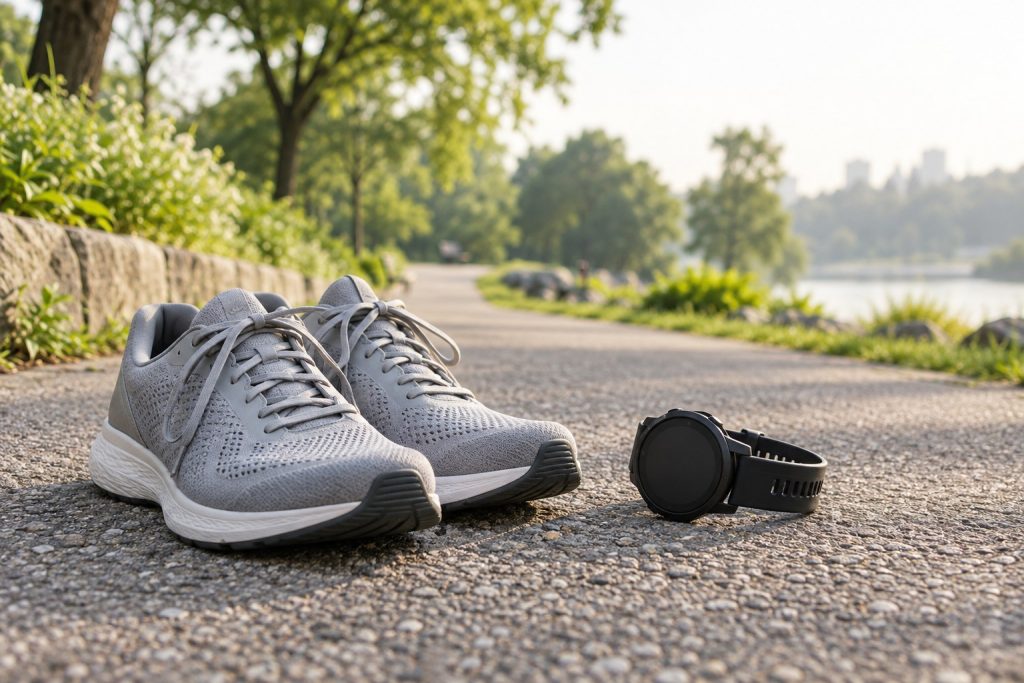
Count total foot contacts
For a simple example, 80 total steps in 30 seconds correspond to 160 steps per minute. Count each left and right contact as a step. If a method counts only one side, confirm how it converts that count to total steps.
Match the measurement window
An average for a whole run and a reading from a short interval describe different windows. Compare the same segment and check how the device handles pauses. A changing display is not necessarily evidence that you counted incorrectly.
Keep cadence separate from pace
Cadence tells you how often steps occur; it is not your distance covered per unit of time. Read pace or speed separately. Different step lengths can accompany the same cadence, so a matching cadence does not guarantee a matching running speed.
Use the number as a description
A cadence reading is useful for recording your own session, not as a standalone grade of technique. There is no single target established by this definition. Do not force an unfamiliar rhythm simply because another runner’s displayed number is higher.
Sources
Related reading
Walking Cadence vs. Speed: What Steps per Minute Tell You
Auto Lap vs Manual Lap: What Is Your Running Watch Recording?
About this article: an introductory editorial draft. Not yet independently reviewed by a fitness professional.