Pumpkin Seeds vs Sunflower Seeds: Compare the Kernels
Pumpkin and sunflower kernels both add crunch, fat and some protein to meals. They differ in flavor, size and nutrient composition, but neither is a universal winner. Compare the edible kernels and the specific preparation rather than judging by the seed’s reputation.
Start with the edible portion
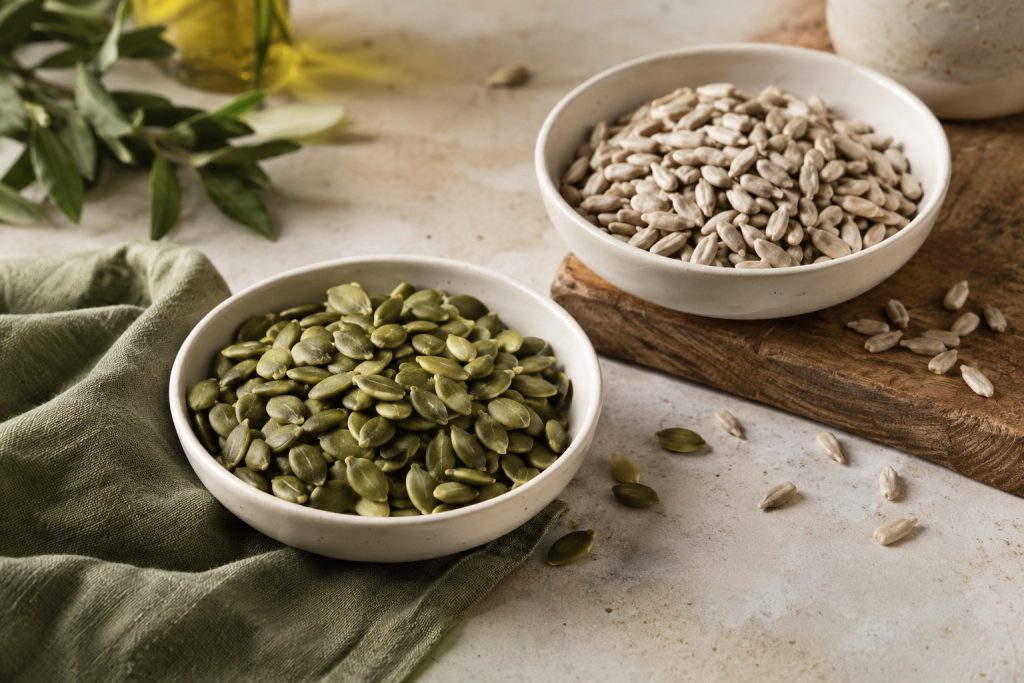
Shelled pumpkin kernels are often sold as pepitas, while sunflower seeds are sold with or without their outer shells. Check what the package contains. If you discard shells, do not log their weight as edible kernels or assume all package serving statements use the same basis.
Match preparation and amount
Compare unsalted with unsalted and similar raw or roasted versions at the same weight. Manufacturer labels, such as NOW Foods’ seed panels, provide product-specific figures. Added salt, oil or sweet coatings can change the comparison more than the front-of-pack name suggests.
Use the texture deliberately
Pumpkin kernels are usually larger and have a firmer bite; sunflower kernels are smaller and scatter easily through salads or porridge. Try a modest topping you can repeat. Seeds can complement a meal without needing to replace every other protein food.
Check practical limits
Use portions that fit the whole meal and follow storage instructions to protect flavor. Check allergens and cross-contact statements when relevant. A food being a seed does not guarantee it is suitable for everyone, and nutrient content is not a promise to treat a deficiency.
Sources
NOW Foods; NOW Foods; USDA MyPlate.
Related reading
About this article: an introductory editorial draft. Not yet independently reviewed by a fitness professional.