Manual vs Motorized Treadmills: Who Moves the Belt?
On a manual treadmill, the user supplies the movement that drives the belt. On a motorized treadmill, a motor drives the belt at the selected setting. This changes the experience of starting, controlling pace and stopping; neither category is automatically the best workout.
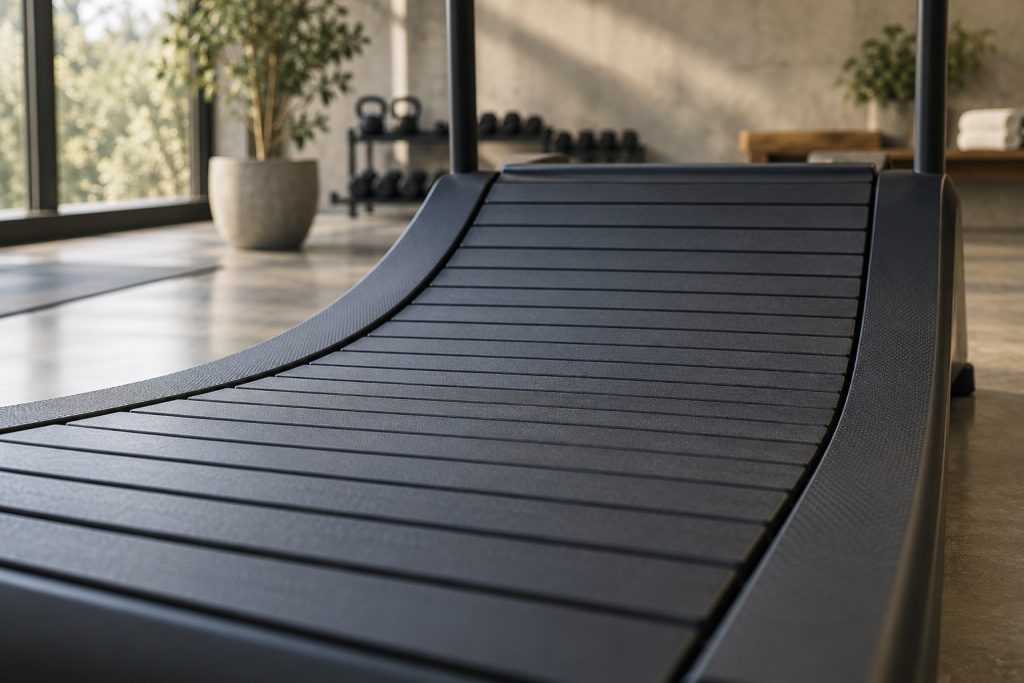
Do not equate manual with curved
Woodway’s Curve is an example of a nonmotorized curved treadmill. That does not mean every manual treadmill has the same shape or feel. Look at the actual running surface, resistance system and operating instructions for the model you will use.
Learn before beginning a session
Ask staff to demonstrate mounting, starting, slowing and stopping. Follow the manual’s handrail and safety instructions. A familiar routine from a motorized machine may not transfer directly, especially when there is no motor speed button controlling the belt.
Compare workouts cautiously
Do not assume equal displayed speeds produce the same effort on different machines. Record the treadmill type with your session and adjust effort to the task. A product’s calorie claim is not a personal measurement or a reason to ignore how the session feels.
Check practical requirements
Nonmotorized belt operation can remove the need for a drive-motor power connection, but displays or accessories may still need power. Check dimensions, clearance and maintenance for the exact model. Try a supervised demonstration before deciding which design fits your routine.
Sources
Woodway Curve; Woodway nonmotorized treadmill manual.
Related reading
About this article: an introductory editorial draft. Not yet independently reviewed by a fitness professional.