Insulated vs Single-Wall Water Bottles for a Workout
An insulated bottle slows heat transfer so drinks change temperature more slowly. A single-wall bottle lacks that insulating layer. Choose according to how long you carry the drink, the conditions and the bottle you find convenient to refill and clean.
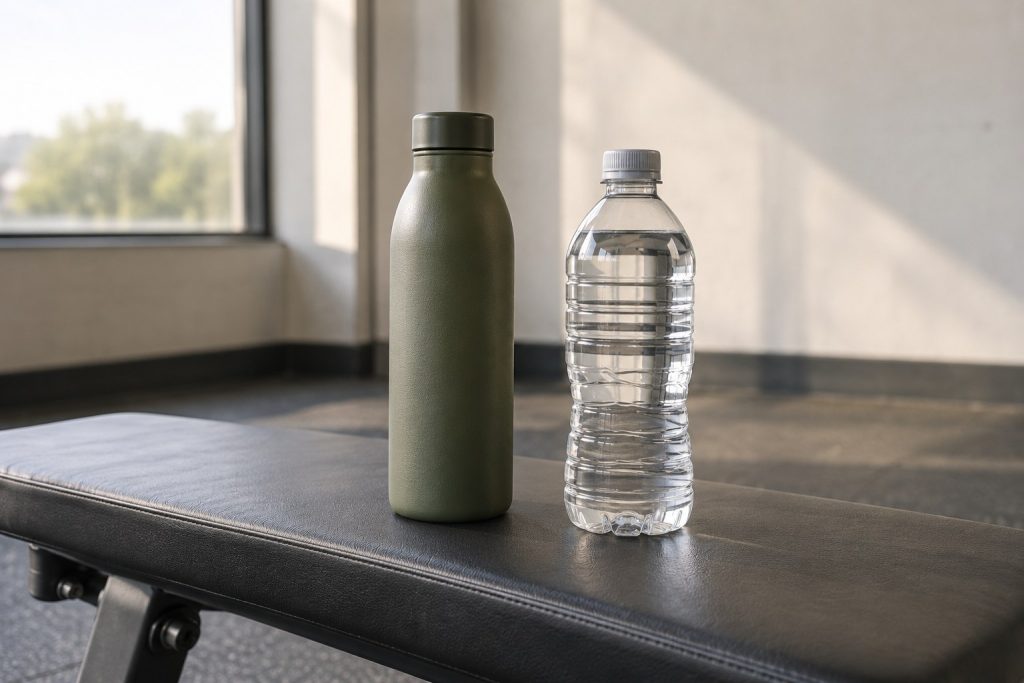
Look at construction, not appearance
A metal exterior does not by itself prove insulation. Look for a stated double-wall or vacuum-insulated construction. Hydro Flask, for example, describes vacuum insulation on its Standard Mouth bottles. A product’s advertised temperature duration applies to its own testing, not every bottle.
Compare usable capacity and fit
Check capacity, empty weight and external dimensions, then imagine the bottle filled. Similar-looking bottles may hold different amounts. Make sure the bottle fits the holder or bag pocket you actually use and can be opened comfortably during a break.
Check the lid separately
A straw lid, screw cap and sipping lid can have different beverage restrictions. Some Hydro Flask straw caps are not intended for hot liquids even when the bottle itself is insulated. Insulation is not permission to use every lid with every drink.
Choose a routine you will maintain
Follow the model’s cleaning and temperature instructions; dishwasher and freezer compatibility vary. Hydro Flask excludes freezer, microwave and stove use for the cited bottles. Clean removable lid parts as directed. Temperature retention does not replace cleaning or make perishable drinks shelf stable.
Sources
Related reading
About this article: an introductory editorial draft. Not yet independently reviewed by a fitness professional.