How to Thaw Frozen Food in the Fridge
Refrigerator thawing lets frozen food defrost while staying cold. USDA recommends planning ahead and keeping the refrigerator at 40°F (4°C) or below. A frozen center does not make it safe to leave a perishable package thawing on the counter.
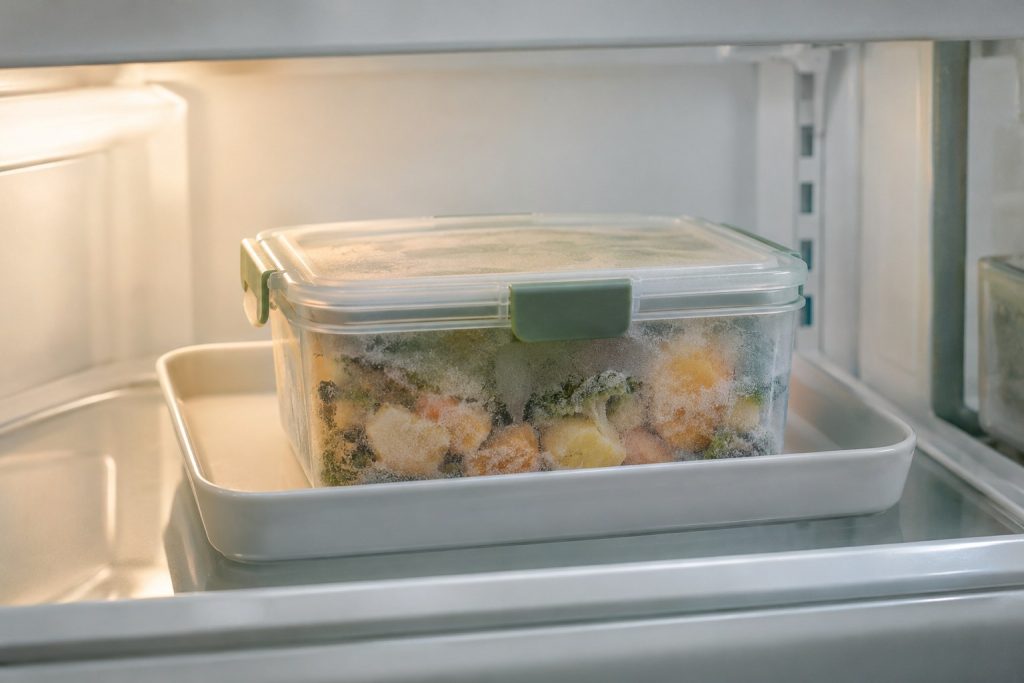
Allow enough time
Thawing depends on the food’s size, shape, packaging and refrigerator conditions. Check the product’s instructions and move it from the freezer early enough. Do not promise yourself a precise dinner time based only on how small the package looks.
Contain any leakage
Place raw meat or poultry in a leakproof container or on a tray that catches drips. Keep it below ready-to-eat foods. Leave space for normal cold-air circulation and avoid using an overfilled shelf that makes spills or accidental contact likely.
Choose a safe alternative if needed
USDA also describes cold-water and microwave thawing, each with specific instructions and requirements to cook immediately afterward. Follow the full method rather than borrowing one step. Hot water and an unattended countertop are not recommended shortcuts for thawing perishable food.
Track what happens afterward
Use the food-specific storage window once thawed. USDA allows refreezing food thawed safely in the refrigerator, though quality may decline; package instructions can be more restrictive. Freezing again does not undo earlier unsafe handling or excessive warm exposure.
Sources
Related reading
About this article: an introductory editorial draft. Not yet independently reviewed by a fitness professional.