How to Compare Protein Bars Without the Marketing
Compare protein bars by the amount you will eat, the protein and energy in that amount, the ingredients, and the price. A large protein number on the wrapper is only part of the comparison. You do not need a protein bar just because you exercise.
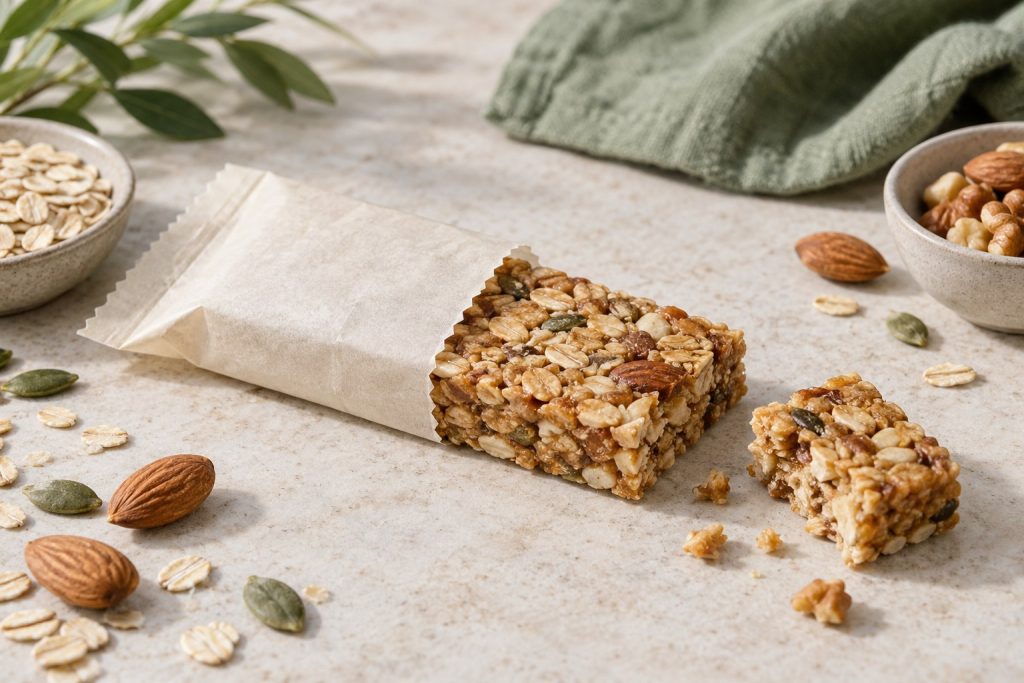
Does the label describe a bar or a pack?
Check the serving size and servings per package before comparing products. The FDA explains that nutrition information is tied to the labeled serving amount. Some packages contain multiple servings, and some labels also provide information for the whole package.
For a fictional example, a label lists 20 g of protein per whole bar. Eating half provides about 10 g, assuming the bar is evenly composed. If a pack contains two bars, check whether the front-of-pack claim refers to one bar or both. The example is arithmetic, not a protein target.
What should you compare after protein?
Look at energy, fiber, total sugars, added sugars where listed, and the ingredients. Consider the purpose of the snack: something portable for a busy afternoon may serve a different role from food you eat before a session.
Compare actual portions rather than choosing solely by protein per calorie or the shortest ingredient list. Those shortcuts leave out taste, tolerability, cost, and how the food fits with the rest of your meals. An unfamiliar ingredient name alone does not establish whether a product is unsuitable.
How do you check ingredients and comfort?
Read allergen information carefully. Bars may contain milk, soy, peanuts, tree nuts, or other ingredients you need to avoid. Follow your established allergy guidance, including relevant cross-contact information.
If you are trying a new bar, buy a small quantity first and see whether you like it and tolerate it during an ordinary day. Avoid making an unfamiliar food part of a demanding event simply because the wrapper promises performance benefits.
Is a protein bar worth the price?
Compare the price per bar you actually eat and the convenience it provides. Yogurt, nuts, sandwiches, or other familiar foods may suit some situations; a packaged bar may suit others. Keep storage needs in mind when deciding what to carry.
You can make a short comparison note with portion size, protein, energy, price, and taste. That is more useful than treating the highest advertised protein number as a universal winner. There is no single ideal bar for every person or every occasion.
Sources
FDA.
Related reading
About this article: an introductory editorial draft. Not yet independently reviewed by a fitness professional.