Herbal Tea vs Black Tea: Read the Caffeine Clue
Black tea comes from the tea plant and ordinarily contains caffeine. Plain peppermint or chamomile infusions are naturally caffeine-free, but an herbal-sounding name does not settle the content of every blend. Read the ingredients and the product’s caffeine information.
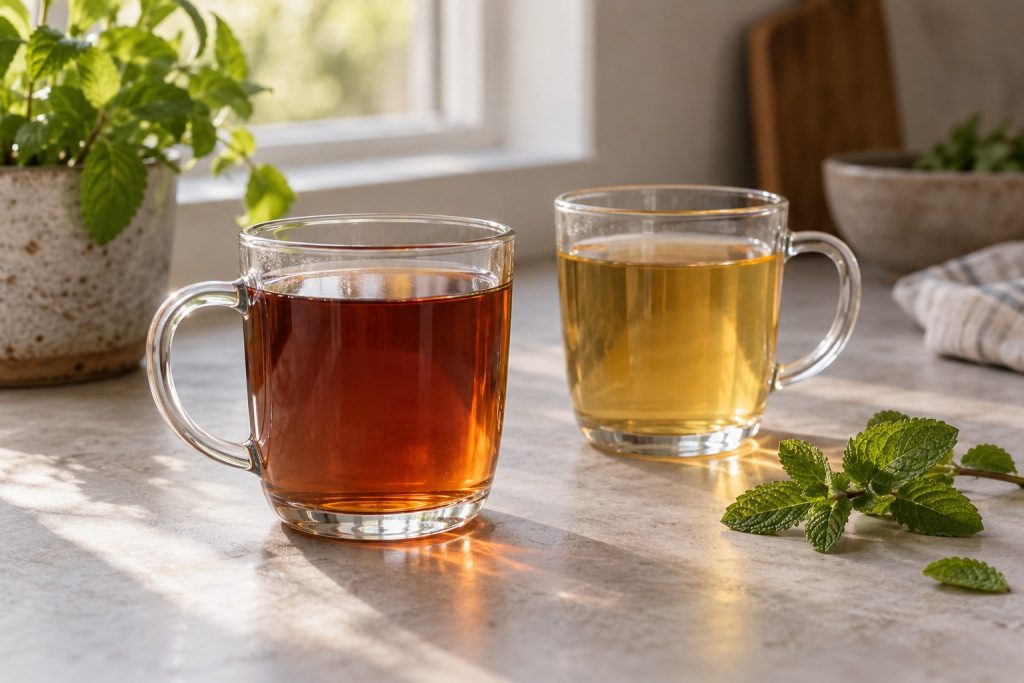
Identify what is in the blend
Twinings distinguishes tea from the Camellia sinensis plant from infusions such as peppermint and chamomile. A fruit or herb flavor can be added to a black or green tea base. The flavor on the front of the box is not the same as the full ingredient list.
Separate decaf from caffeine-free
Decaffeinated black tea has had caffeine removed, but some can remain. A naturally caffeine-free infusion is a different product category. The FDA cautions that decaffeinated does not mean entirely caffeine-free, so use the wording carefully when comparing options.
Compare the drink you prepare
Cup size, amount of tea and preparation affect what you drink. Follow the product’s brewing directions and use its information where available. Do not assume that a weak color proves low caffeine or that every herbal mixture has the same ingredients.
Avoid promises based on the word herbal
Herbal is not a guarantee of a sleep effect, a treatment or suitability with every medicine. If choosing an infusion for a medical reason, check the ingredients with your clinician or pharmacist. For an everyday drink, start with taste, clear labeling and a preparation you enjoy.
Sources
Related reading
About this article: an introductory editorial draft. Not yet independently reviewed by a fitness professional.