Glass vs Metal Baking Pan: Can You Swap Them?
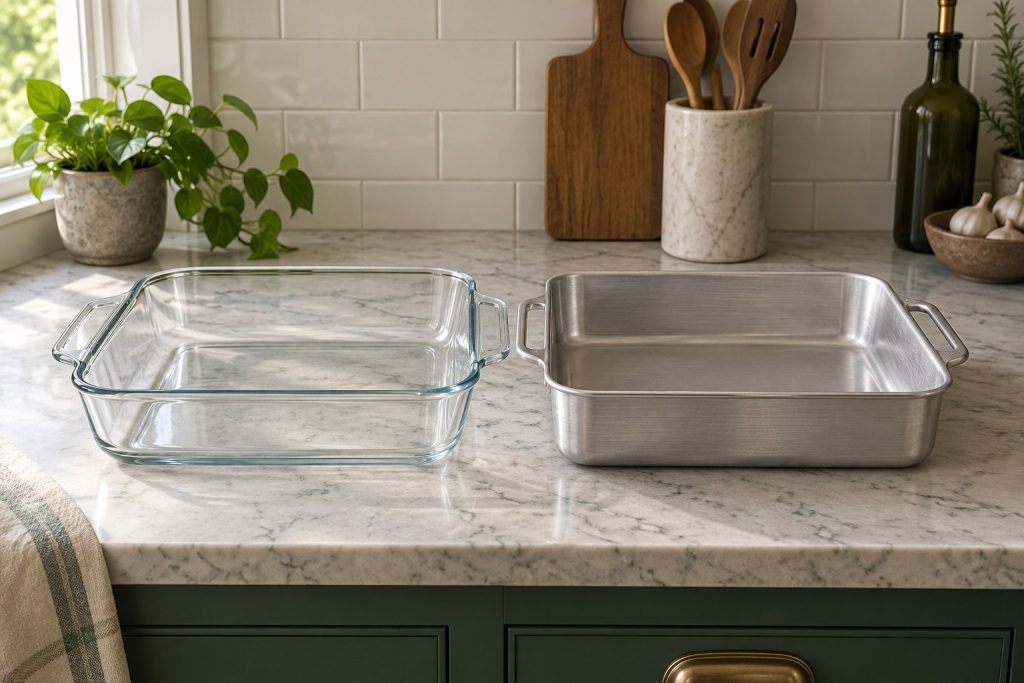
Glass and metal baking pans can give different results even when their dimensions look similar. King Arthur explains that glass heats more slowly than metal and retains heat longer. Use the pan material specified by the recipe when possible.
Consider the edges and center
Different heat transfer can change how the edges bake relative to the middle. A familiar baking time is therefore not a guarantee after a pan swap. Follow the recipe’s doneness checks as well as its approximate timing.
Match size and shape too
Material is only one variable. Check the internal dimensions and depth, and whether the recipe needs a particular shape. A pan that looks similar in a photograph can spread the batter to a different depth and change the result.
Use specific adjustment guidance
King Arthur discusses temperature adjustments for glass, but one conversion is not exact for every recipe and oven. Prefer the recipe author’s tested alternative. Record any change so you can judge and repeat the result instead of changing several variables at once.
Read the cookware instructions
Verify that the exact dish is suitable for the planned oven use and follow its temperature and handling limits. Clear glass does not automatically mean oven-safe glass. The recipe’s suggestion cannot override the manufacturer’s restrictions for your particular dish.
Sources
Related reading
Parchment Paper vs Wax Paper: Which Can Line a Baking Sheet?
How to Measure Flour Without Packing Too Much into the Cup
Related reading
Does Baking Time Include Preheating the Oven?
Related reading
About this article: an introductory editorial draft. Not yet independently reviewed by a fitness professional.