Floor Pump vs Mini Bike Pump: Home and Roadside Jobs
A floor pump is useful for routine inflation at home; a mini pump is designed to travel with the bike or rider. The practical choice depends on portability, valve compatibility and the tire’s inflation needs. Owning a pump does not by itself provide a complete puncture-repair kit.
Start with where you will inflate
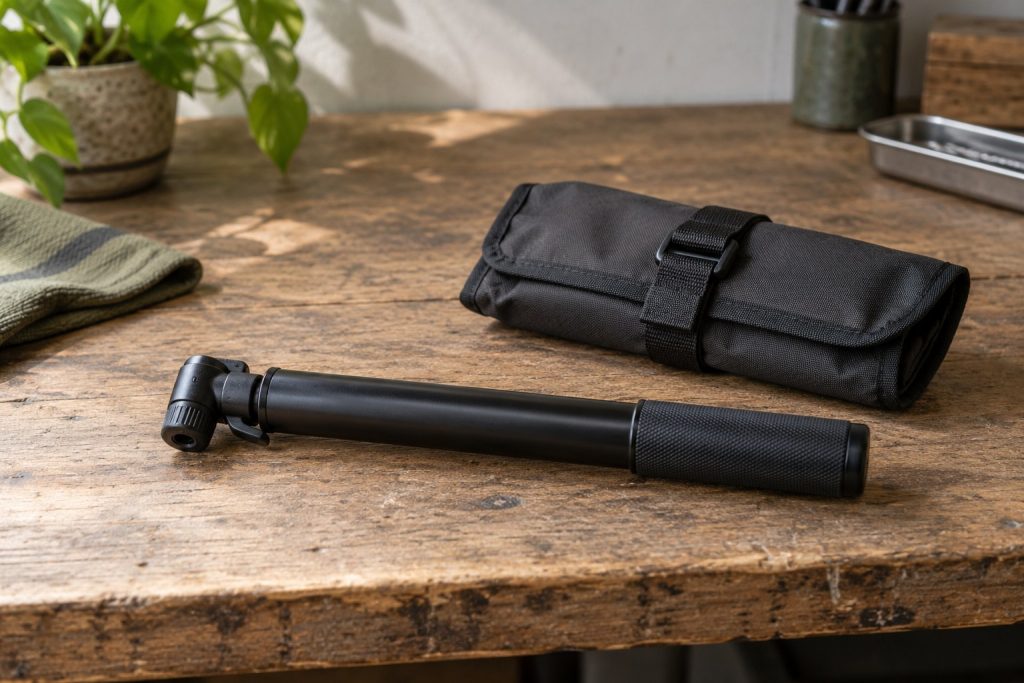
A floor pump typically offers a stable base, longer stroke and a hose. A mini pump trades some convenience for a smaller package. Topeak sells both designs; compare the exact model rather than assuming every small pump performs identically.
Match the valve and connection
Check whether the head supports your valve and whether it needs an adapter or adjustment. Practice attaching and removing it before a ride. Support the connection as instructed instead of using the valve stem as a handle while pumping.
Check capacity and the gauge
Confirm that the pump suits the tire’s pressure and volume requirements. A pump’s maximum rating is not your target tire pressure. Use the wheel and tire guidance, and check how pressure will be measured if the portable pump has no gauge.
Plan for the cause of a flat
Repeatedly adding air will not resolve every puncture or damaged valve. Carry repair supplies appropriate to your tire system and know how to use them, or have a transport plan. Practice at home when there is no roadside time pressure.
Sources
Topeak floor pump specifications; Topeak mini pumps.
Related reading
Presta vs Schrader: Which Valve Is on Your Bicycle?
Bike Tire Pressure: What to Check Before Pumping
Related reading
About this article: an introductory editorial draft. Not yet independently reviewed by a fitness professional.