Dumbbell Romanian deadlift: setup, range and practice notes
A dumbbell Romanian deadlift is a standing hip hinge with two weights. This reference covers the two-leg version: identify the movement, clarify handling and keep a useful practice record. It does not choose a starting weight or a set-and-repetition prescription. NASM: dumbbell RDL (English).
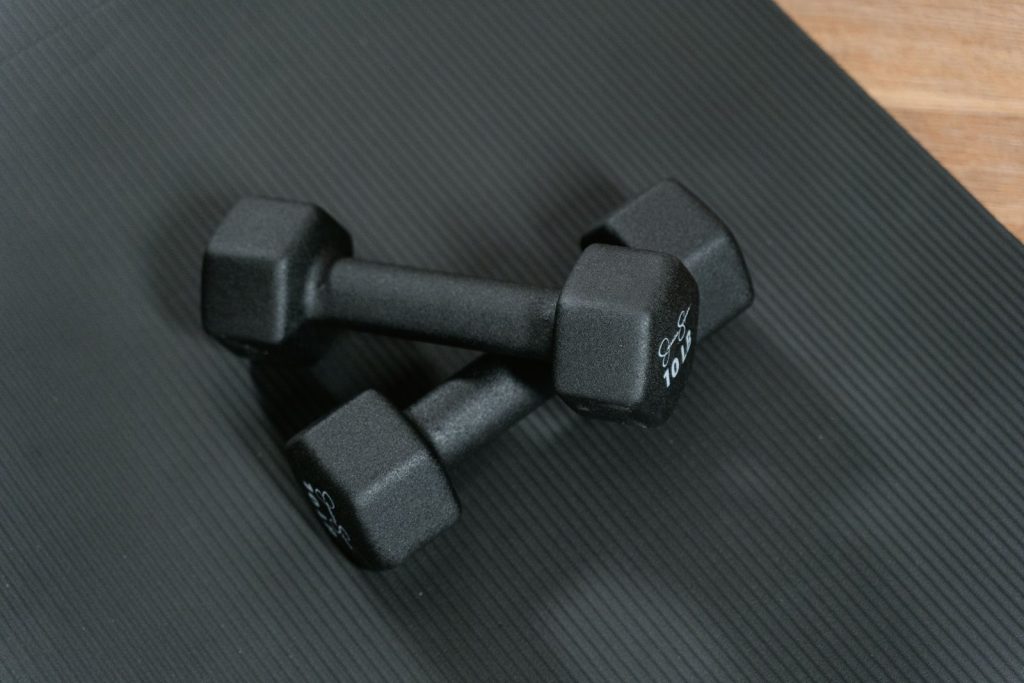
Identify the version before practising
The standing RDL repetition differs from resetting a floor deadlift. A single-leg version, a barbell version and an unloaded hinge drill are also distinct tasks. Write the full exercise name in your plan; “deadlift” alone can leave the intended version unclear. ACE: barbell RDL reference (English).
Resolve the setup before taking the weights
Use the linked hinge guide to clarify hip and knee movement before choosing resistance. If you cannot explain how your assigned exercise begins and ends, take that question to an instructor before adding a load. ACE: hinge learning drill (English).
- Which exact two-leg variation does my plan mean?
- Where will I obtain and return the dumbbells, and who will demonstrate that handling?
- What unit is printed on each weight, and does my log mean each dumbbell or the pair?
- What starting position and stopping point have I been shown?
- Is the practice area clear, and what question remains unresolved?
Read the lowering and return as one repetition
- Start standing with a dumbbell in each hand near the thighs; let the head follow the trunk instead of lifting the chin. University of Sussex: dumbbell teaching sheet (PDF) (English).
- Keep knees softly bent and send hips backward. Stop lowering at an endpoint you can control. NASM: dumbbell RDL (English).
- Reverse the hinge to stand, keeping the weights close rather than swinging them forward. ACE: barbell RDL reference (English).
Stop if the movement hurts; get instruction if technique or handling is unclear. This sequence begins once you are standing with the weights. It is not a separate tutorial for lifting them from the floor or putting them away. Mayo Clinic: weight-training technique (English).
Turn an observation into a coaching question
| What you notice | A useful question before another attempt |
|---|---|
| I keep trying to reach the floor. | What endpoint does this assigned version require, and how will I recognise it? |
| My knees keep bending more as I lower. | Am I following the intended hinge, or changing to a different movement? |
| The weight travels away from my legs or my grip changes. | Can you review the setup, load and complete repetition before I repeat it? |
These prompts describe observations; they do not diagnose a cause from a photograph or one sensation. An instructor can review the actual movement and adjust the task. The same question may need a different answer after changing equipment or the exercise version.
Keep a five-part practice record
Copy these fields into the existing workout log. Record what happened, including a shortened or stopped set. An empty field means unrecorded; it is not a zero or confirmation that everything matched.
- Date, exact exercise version and equipment identity.
- Load and unit, explicitly per dumbbell or combined for the pair.
- Starting setup, described endpoint and the cue demonstrated to you.
- Completed repetitions for each set, planned versus actual rest, and effort scale if used.
- Why the set ended, any changed range or setup, and one question for the next practice.
Worked record: 6 kg each is not 6 kg combined
Fictional entry A: “two-leg dumbbell RDL; two dumbbells labelled 6 kg; load recorded as 6 kg each; one completed set of 8; endpoint described as above the knees; rest not recorded.” This is a notation example, not a suggested exercise dose or depth.
Entry B says “12 kg combined” for the same two 6 kg dumbbells. The arithmetic is 6 + 6 = 12 kg. The wording changed; the equipment load did not double. Keep the original wording and make its convention explicit before comparing entries.
If B instead records a different endpoint or a different implement, carry that change into the review. Matching load and repetition numbers alone do not show that the two attempts were the same task. Do not fill in missing rest or technique notes from memory just to make a comparison look complete.
Choose the next question, not an automatic increase
Before the next practice, check the exact version, load convention and recorded endpoint. If an instruction is still unclear, clarify it. If you have a progression rule, use that rule with the original log rather than treating one extra repetition or a lower endpoint as automatic permission to add weight.
Sources and scope of this reference
The linked teaching references show particular demonstrations. Their wording and equipment differ; none is an individual assessment of your movement. The questions and fictional records here are original learning aids. No independent expert review is implied.
- NASM: dumbbell RDL (English).
- University of Sussex: dumbbell teaching sheet (PDF) (English).
- ACE: barbell RDL reference (English).
- ACE: hinge learning drill (English).
- Mayo Clinic: weight-training technique (English).
Continue with the matching resource
About this article: an introductory editorial draft. Not yet independently reviewed by a fitness professional.