Bok Choy vs Napa Cabbage: A Kitchen Comparison
Bok choy, also called pak choi, and napa cabbage are different vegetables used in many similar dishes. Bok choy has thick stalks and darker leaves; napa forms a head with paler, crinkled leaves.
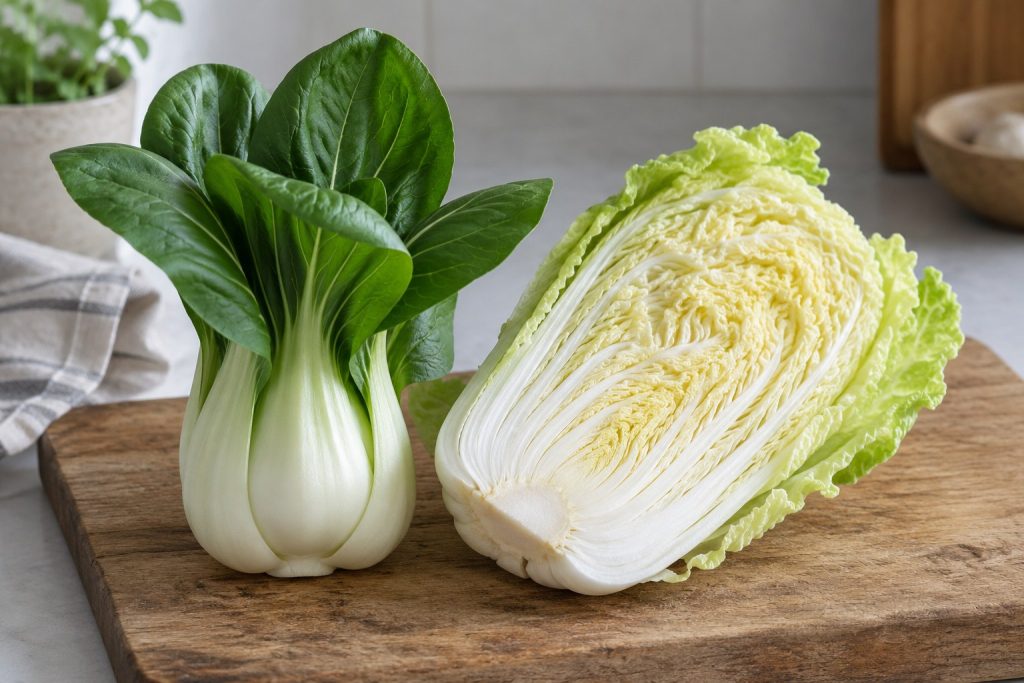
Check what Chinese cabbage means
The broad English label Chinese cabbage can cause confusion. Look for the specific name and structure rather than relying on that label alone. A compact napa head and an open cluster of bok choy stalks are prepared differently.
Cut with the texture in mind
Thick bok choy stalks and thin leaves need not cook at the same pace. A practical approach is to cut the stalks smaller or add leaves later, depending on the recipe. Napa also has thicker ribs, so inspect the pieces you cut.
Wash where leaves meet
Separate or open the leaves enough to rinse away visible dirt around their bases. Prepare the vegetable according to the recipe after cleaning. A clean-looking outer leaf does not tell you what is trapped deeper inside a head or cluster.
Swap prepared amounts, not heads
A head or bunch is not a standard portion. When a recipe gives a prepared weight, compare that amount rather than substituting whole vegetables by count. Either choice can change the dish’s texture; it is a variation, not an identical replacement.
Sources
University of Minnesota Extension.
Related reading
Radicchio vs Red Cabbage: Similar Color, Different Leaves
How to Wash Fruit and Vegetables Without Soap
Related reading
Broccoli vs Broccolini: Is Baby Broccoli Just Younger?
Related reading
About this article: an introductory editorial draft. Not yet independently reviewed by a fitness professional.