Bike Q-Factor vs Stance Width: Why They Are Not the Same
Q-factor describes the spacing between a bicycle’s crank arms at the pedal mounting surfaces. Stance width describes how far apart your feet sit while pedaling. Pedal axle length also influences that position, so the terms are not interchangeable.
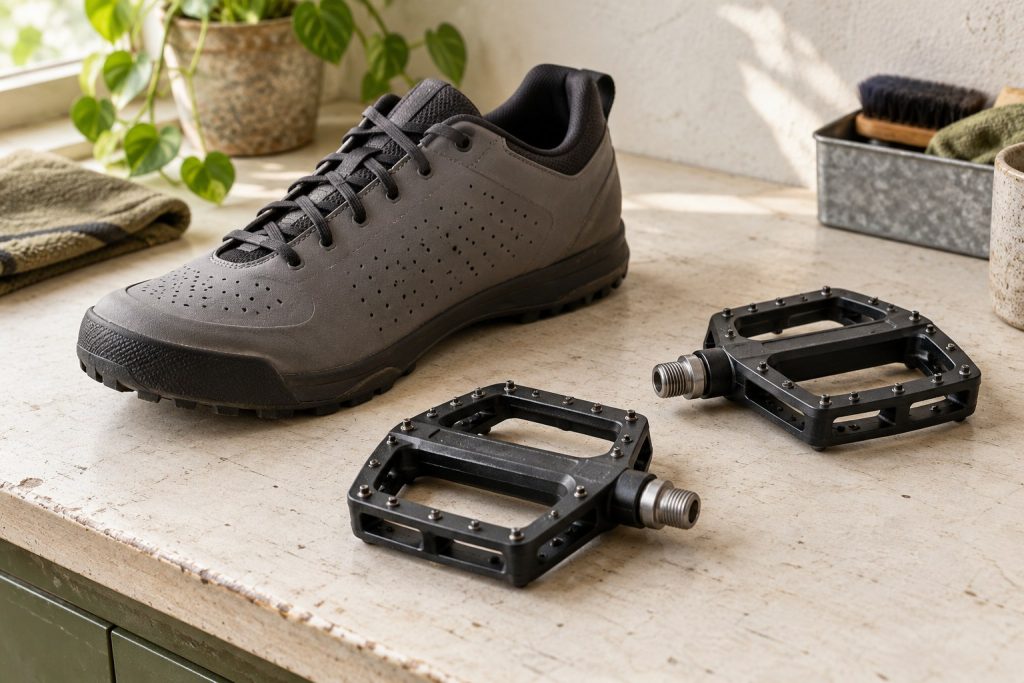
Separate crank and pedal dimensions
Shimano explains that stance width depends on both crank Q-factor and pedal axle length. Two bicycles with the same crank spacing can therefore position the feet differently if their pedals differ. Check the measurement definition in each specification.
A wider pedal is not a wider platform
Axle length concerns how far the pedal sits from the crank. Platform width describes the surface beneath the foot. A larger platform does not automatically move the center of your shoe farther outward by the same amount.
Compare the whole setup
When moving between bikes, note crank model, pedal model, shoes, and cleat placement. Copying only a pedal name may not reproduce the same position. Keep a record of the current setup before asking for a fit adjustment.
Avoid improvised widening
Do not add arbitrary washers or extensions to chase a measurement. Use manufacturer-approved components and installation instructions. There is no ideal stance width established by this label alone; persistent discomfort needs an individual assessment rather than a universal wider-or-narrower rule.
Sources
Shimano — Pedal axle length and Q-factor.
Related reading
Two-Bolt vs Three-Bolt Cycling Cleats: Check Both Connections
About this article: an introductory editorial draft. Not yet independently reviewed by a fitness professional.