Acorn vs Butternut Squash: Choose for the Shape of the Dish
Acorn and butternut are winter squashes, but they are not interchangeable whole objects. The ribbed acorn shape and the long-necked butternut shape offer different ways to portion, fill or cut the vegetable.
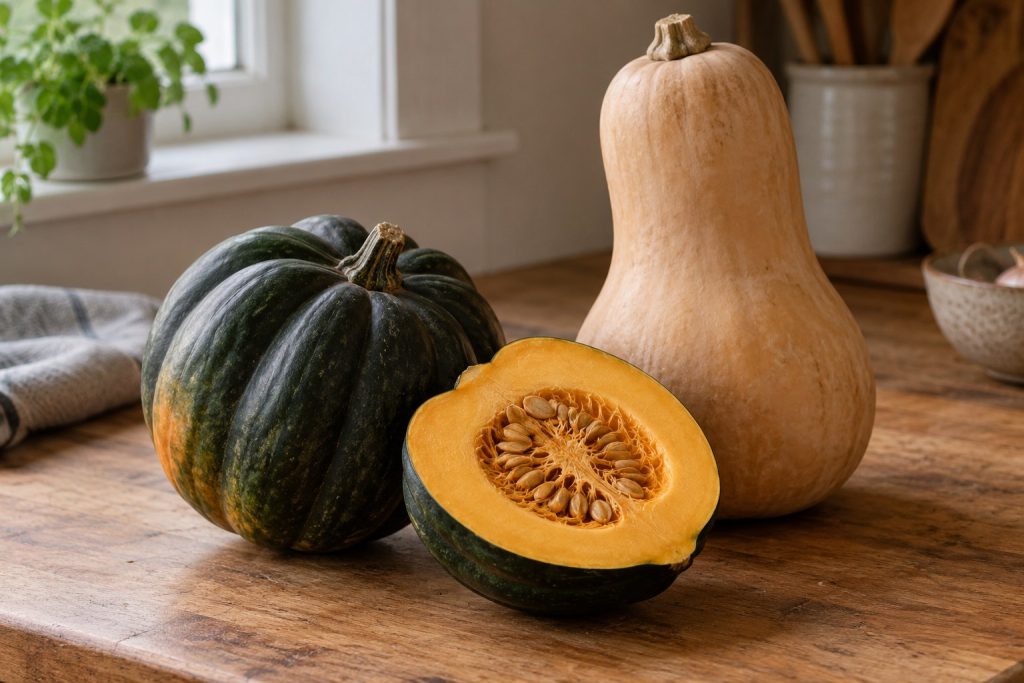
Identify the shape you need
A typical acorn squash is compact and ribbed, while butternut has a smoother tan surface, a neck and a wider seed end. Check the named variety on the label. Color alone is less useful than the combination of shape and product name.
Decide between halves and pieces
A recipe built around a filled squash half depends on the cavity and serving shape. A recipe for prepared cubes is more flexible about the original outline. Choose the method before deciding that any whole squash is an equal substitute.
Treat the rind as part of preparation
Illinois Extension notes that acorn skin can be eaten. That does not mean every winter squash rind will give the texture you want. Follow the recipe’s peeling or scooping instructions and use a stable board for preparation.
Measure usable flesh
Seeds, rind and trimming change the amount available for cooking. Compare prepared flesh when the recipe gives that measure, rather than buying the same number of squashes. Keep the cooking method and piece size consistent when making a substitution.
Sources
University of Illinois Extension; University of Illinois Extension.
Related reading
About this article: an introductory editorial draft. Not yet independently reviewed by a fitness professional.