Spearmint vs Peppermint: Choosing Mint for the Kitchen
Spearmint and peppermint are different mints, and a recipe that names one is asking for its particular aroma. For a recipe saying only mint, check the intended dish and taste the culinary leaves you bought.
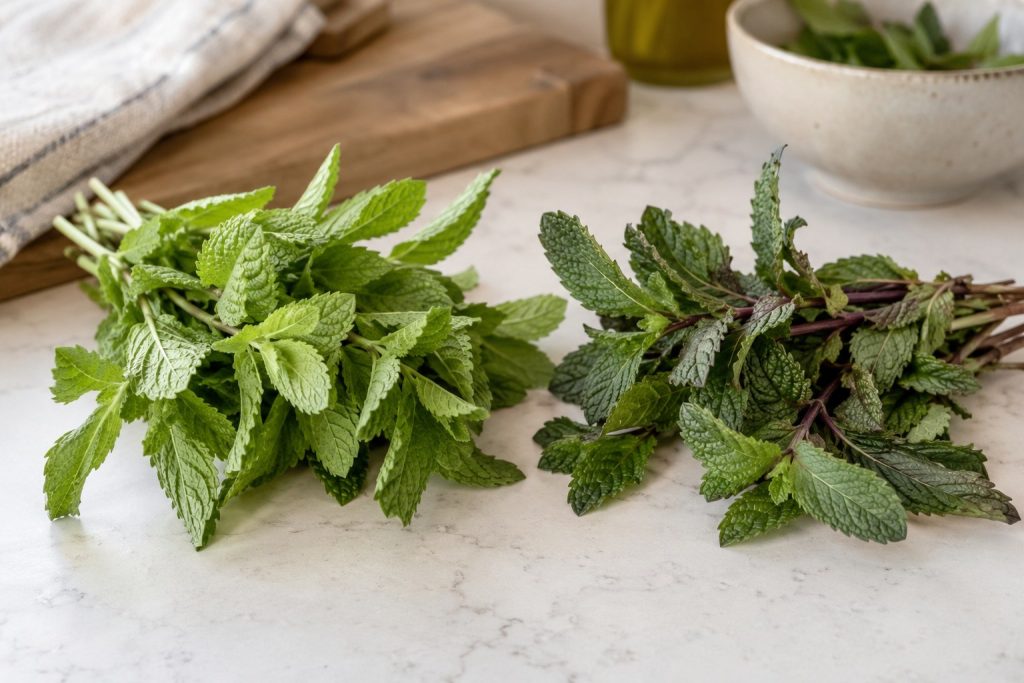
Know the common descriptions
University of Maryland Extension describes spearmint as having a sweet aroma and peppermint as having a warm, spicy scent. It lists spearmint uses including teas, drinks and mint sauce. These descriptions guide flavor choice rather than establishing a universal winner.
Use the label as your main check
Spearmint commonly has light green, pointed, crinkled leaves; peppermint often has darker leaves and reddish stems. Appearance varies, so do not identify a plant from leaf color alone. This comparison is for labeled culinary mint, not for identifying unknown wild plants.
Try a small amount in the dish
For a fresh salad or sauce, chop a little and taste it in a small ready-to-eat portion before seasoning the entire batch. Substituting another mint can work, but the aroma may differ. The recipe’s named variety is the more predictable choice.
Leaves are not extracts or essential oils
Fresh leaves, dried herbs, flavoring extracts and essential oils are different products. Do not turn a leaf quantity into drops of oil. Use a recipe and product explicitly intended for the culinary form you have.
Sources
University of Maryland Extension.
Related reading
About this article: an introductory editorial draft. Not yet independently reviewed by a fitness professional.