Sweet Basil vs Thai Basil: Which One Fits Your Recipe?
Sweet basil and Thai basil are culinary basil types with different flavor profiles. Sweet basil is a familiar choice for Italian-style pesto; Thai basil brings a more pronounced licorice-like, peppery character.
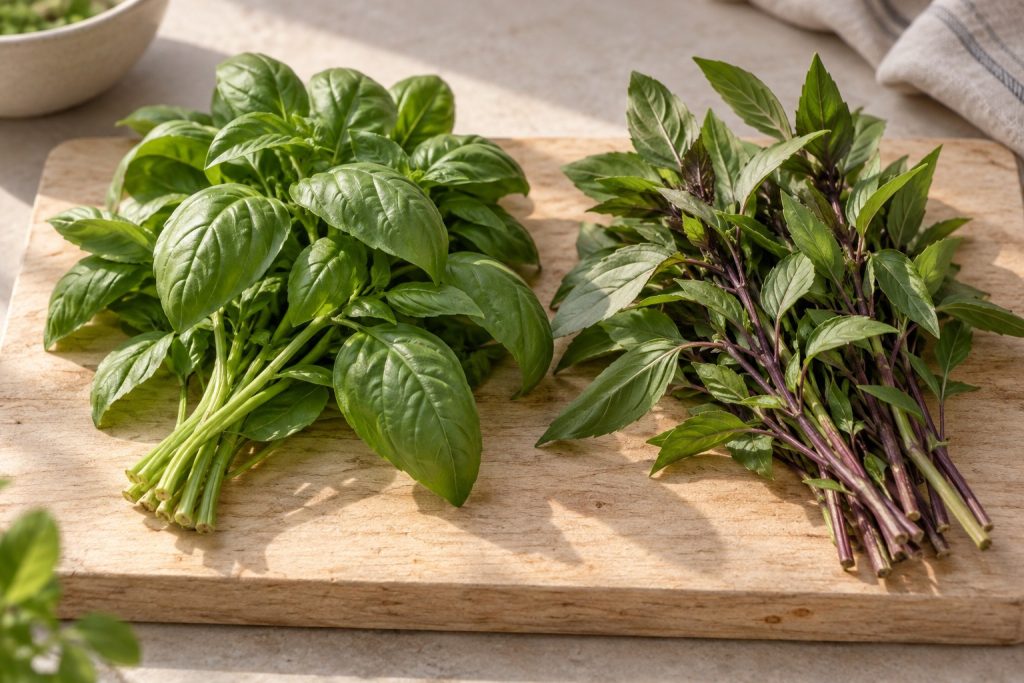
Use appearance as a clue
Sweet basil commonly has broad green leaves. Thai basil often has narrower leaves and purple stems. These are useful shopping clues, not a complete identification system: not every purple basil plant is Thai basil. A named plant or package label is more dependable.
Let the dish guide the choice
For a conventional sweet-basil pesto, buy sweet basil. For a recipe specifying Thai basil, its distinctive aroma is part of the intended result. Thai basil is used in Southeast Asian dishes including salads, spring rolls and stir-fries, but recipes within those cuisines vary.
Substitute with a flavor change in mind
If only the other type is available, decide whether changing the dish is acceptable. Start with a small amount in a ready-to-eat sample where practical. Do not promise an identical pesto or sauce simply because both ingredients are called basil.
Compare fresh herbs on the same basis
A handful of loose leaves and a bunch with stems are different quantities. Follow any prepared-weight or leaf-only instruction in the recipe. This comparison concerns fresh culinary basil; switching to a dried product is another adjustment and should follow the recipe’s guidance.
Sources
Bonnie Plants — Sweet basil; Bonnie Plants — Thai basil.
Related reading
Fresh vs Dried Herbs: Why the Spoonful Is Different
Flat-Leaf vs Curly Parsley: Both Belong in the Kitchen
Related reading
About this article: an introductory editorial draft. Not yet independently reviewed by a fitness professional.