Phyllo vs Puff Pastry: Why the Layers Work Differently
Phyllo consists of very thin sheets that are often layered with added fat. Puff pastry contains fat within a laminated dough structure. Both can produce flaky results, but they do not behave as interchangeable sheets in every recipe.
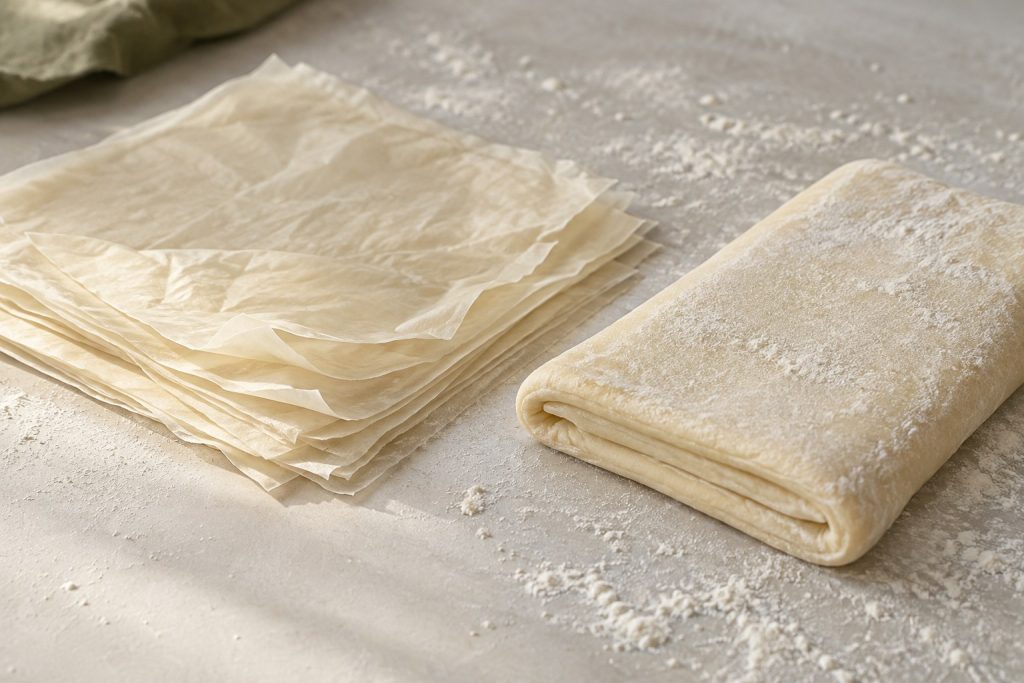
Identify the dough in the package
Athens describes phyllo as tissue-thin unleavened sheets. Its comparison explains that puff pastry’s fat sits within folded dough layers. Similar frozen packaging does not mean the products need the same handling.
Follow the recipe’s layering method
A phyllo recipe may ask you to brush and stack individual sheets. Puff pastry uses its existing laminated structure. Replacing one with the other changes more than thickness, so use instructions written for the dough you have.
Thaw according to the product
Read the package before opening or unfolding frozen sheets. Different products can specify different preparation steps. Do not force a frozen sheet open or assume the timing from another brand applies.
Compare the finished recipe
The fat added between phyllo sheets and the filling both contribute to the final dish. An unprepared dough comparison does not establish which finished pie is lighter. Check ingredients and allergens on the exact package, including whether the formula uses butter or other fats.
Sources
Athens Foods — Phyllo and puff pastry; Athens Foods — Phyllo frequently asked questions.
Related reading
Rice Paper vs Egg-Roll Wrappers: Read the Package First
Parchment Paper vs Wax Paper: Which Can Line a Baking Sheet?
About this article: an introductory editorial draft. Not yet independently reviewed by a fitness professional.