Running Shoe Lugs: Why Mud and Pavement Need Different Tread
Running-shoe lugs are the raised blocks beneath the outsole. Deep, widely spaced lugs suit soft ground differently from the broader, flatter tread commonly used on pavement; more depth is not automatically more grip everywhere.
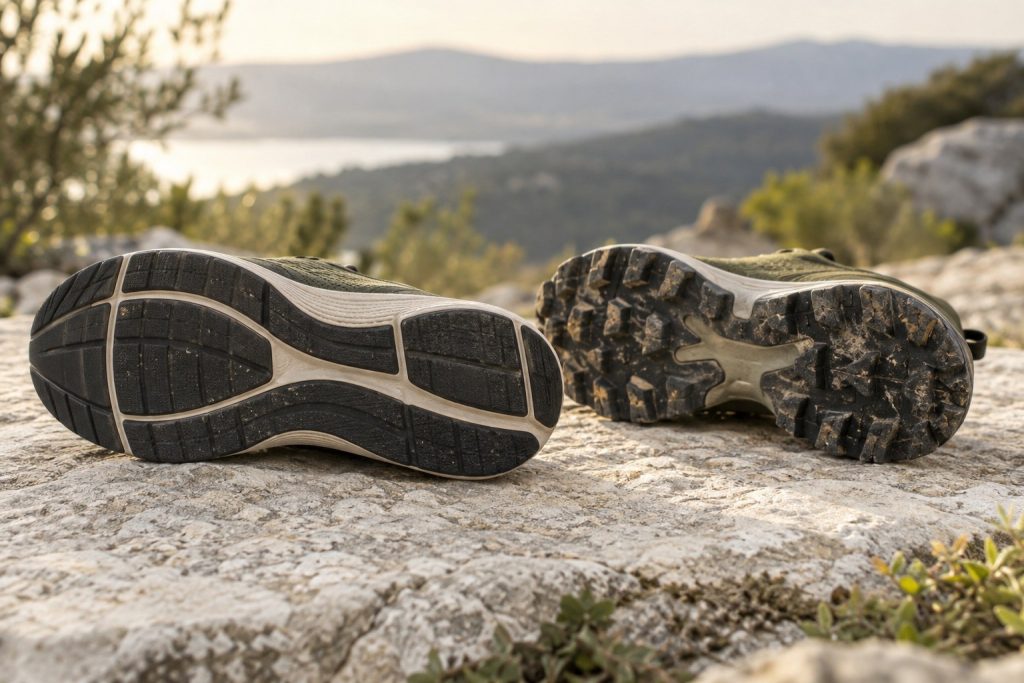
Match the ground you actually use
Salomon describes pronounced mud lugs that penetrate soft ground, with channels that help mud clear. Its road outsole designs use wide, flat lugs for hard surfaces. These are design purposes, not a guarantee against slipping on a particular route.
Look beyond depth
Rubber compound, lug spacing, shape, and wear all contribute to how an outsole behaves. Comparing only the deepest measurement misses those differences. A rugged-looking shoe can still be unsuitable for your mix of pavement, rock, and muddy paths.
Describe a mixed route honestly
If a run begins on streets and finishes on firm park paths, compare mixed-terrain designs as well as dedicated trail shoes. If deep mud dominates, examine mud-specific options. Keep fit and comfort in the comparison rather than selecting by appearance.
Recheck as conditions change
Inspect worn or damaged tread and remove accumulated dirt according to the shoe’s care instructions. Wet surfaces and loose debris still require care. The practical question is whether the outsole matches today’s terrain, not whether it looks more aggressive.
Sources
Related reading
Hiking Boots vs Trail-Running Shoes for a Day Walk
How to Clean and Dry Running Shoes
Related reading
About this article: an introductory editorial draft. Not yet independently reviewed by a fitness professional.