Sour Cream vs Crème Fraîche: What Changes in a Hot Sauce?
Sour cream and crème fraîche are related cultured dairy ingredients, but they are not always interchangeable. Crème fraîche is commonly richer and less sharply tangy. The actual fat content and recipe matter more than a similar appearance in the tub.
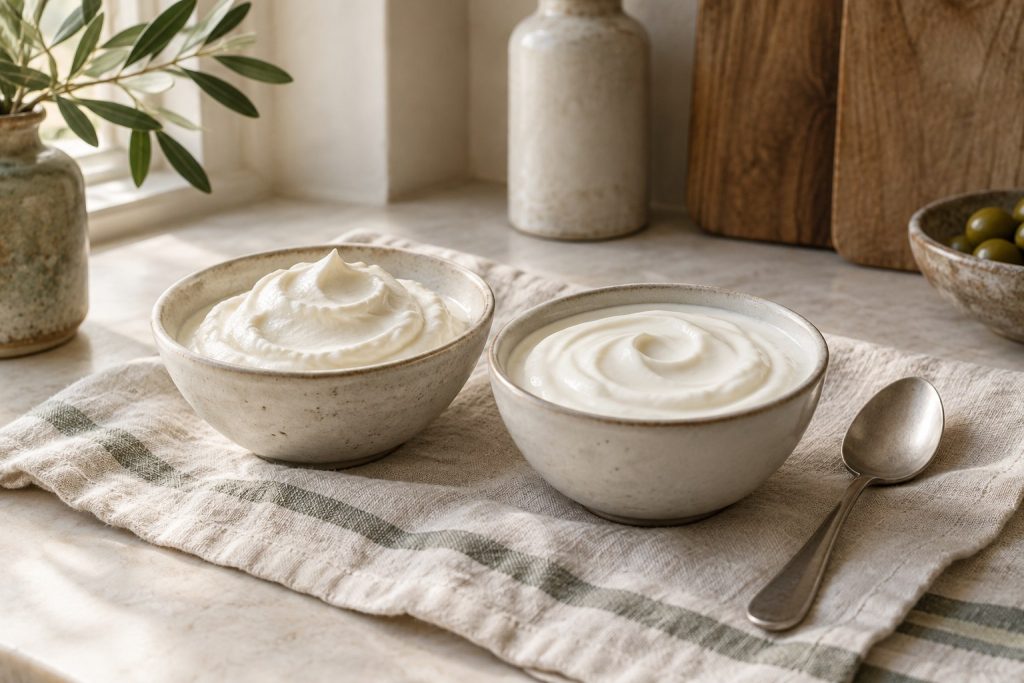
Compare the product, not a universal percentage
Vermont Creamery describes its crème fraîche as a high-fat cultured cream with good stability in hot cooking. That description belongs to its product. Read your own label, since names, formulations and fat levels vary by brand and country.
Choose for the job in the pan
For finishing a hot sauce, follow a recipe written for the cream you have. A product that behaves well as a cold topping may separate under different heat or acidity. Avoid assuming that matching spoonfuls produces identical cooking behavior.
Be more cautious in baking
Replacing a cultured cream can change fat, moisture and acidity together. Those changes can affect a batter beyond its flavor. Use a tested substitution from the recipe author rather than correcting only thickness with extra flour or water.
Check plain versus flavored
Plain cultured cream is different from a sweetened vanilla version. Check ingredients before adding it to a savory dish, and follow the package’s refrigeration instructions. Neither a French name nor a thick texture establishes a nutritional advantage on its own.
Sources
Vermont Creamery — Crème Fraîche; Vermont Creamery — Vanilla Crème Fraîche.
Related reading
About this article: an introductory editorial draft. Not yet independently reviewed by a fitness professional.