Balsamic Vinegar vs Glaze: Dressing Ingredient or Finishing Drizzle?
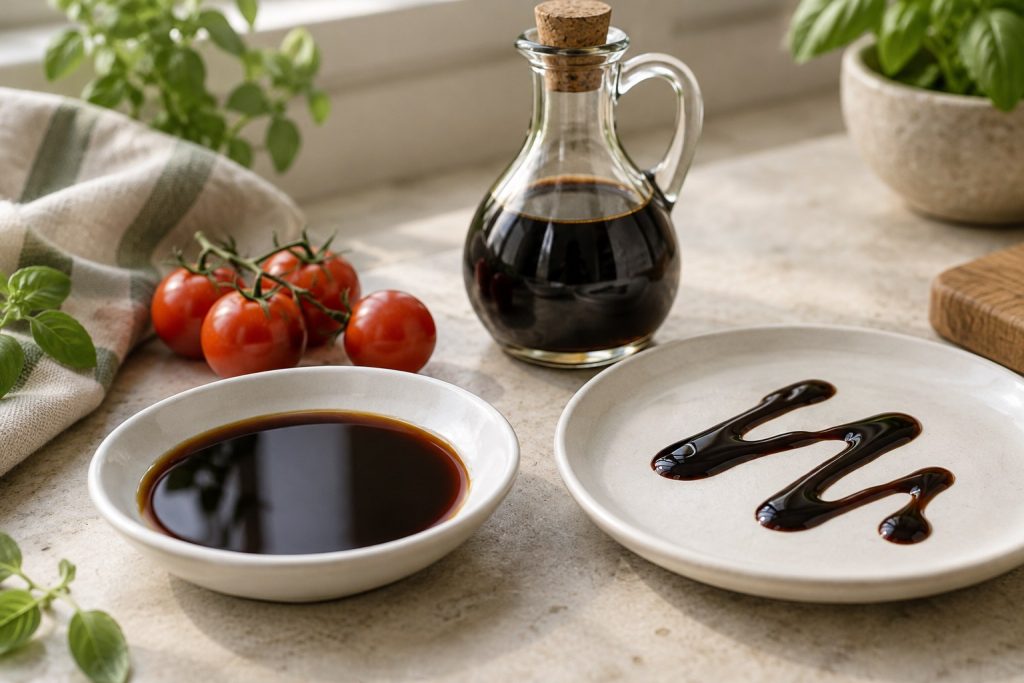
Balsamic glaze is generally a thick finishing condiment, while balsamic vinegar is commonly used in dressings and sauces. A glaze is not necessarily just the same vinegar in a smaller bottle. Read its ingredients before substituting.
Check how the glaze is made
Bertolli’s cited glaze lists concentrated grape must, balsamic vinegar, wine vinegar and thickeners including modified starch and xanthan gum. That illustrates a formulated product. Other glazes and homemade reductions may have different compositions.
Choose for the job in the dish
A thick drizzle can stay visibly on tomatoes or a finished plate. A vinegar can be whisked into a dressing. If a recipe needs a particular amount of liquid and acidity, switching to a glaze changes more than appearance.
Compare portions and labels
Use equal amounts when comparing nutrition panels, then consider how much you actually serve. Do not infer sugar content from thickness alone. Check the current bottle, especially when an online description and its nutrition table appear inconsistent.
Keep cooking swaps in their context
Follow a tested recipe for the closest result and taste your finished dressing before adding it to the whole salad. This is a cooking comparison, not guidance for home canning. Do not use flavor or thickness to judge preservation suitability.
Sources
Related reading
About this article: an introductory editorial draft. Not yet independently reviewed by a fitness professional.