Golden vs Dark Raisins: Color Can Come from Processing
Golden and dark raisins are both dried grapes, but the color difference need not mean different grape colors on the vine. Sun-Maid describes different processing for its golden and natural seedless raisins. Check the specific product when comparing them.
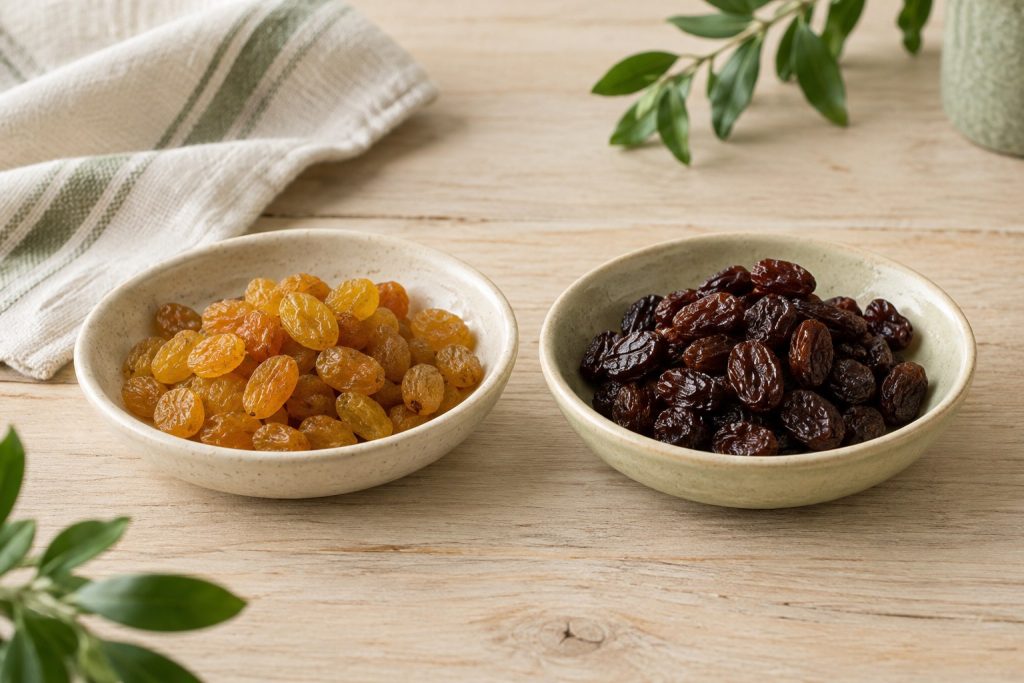
Understand the producer’s example
Sun-Maid describes its natural seedless raisins as sun-dried, while its golden raisins are treated with sulfur dioxide and tunnel-dried. This is a processing distinction for those products. Do not infer the whole production method from color alone across every brand.
Read added ingredients explicitly
The cited golden-raisin label lists sulfur dioxide, identified as sulfites, as a preservative. Read the current package if you need to avoid an ingredient. A light color is not a reliable substitute for checking the written ingredient information.
Keep recipe preparation consistent
Follow the recipe’s chosen raisin type and any soaking or draining step. If substituting, keep the measurement method consistent and expect appearance or flavor to differ. A packed spoonful and a loosely filled spoonful introduce another change besides raisin type.
Compare equivalent portions
Use the same serving weight when comparing nutrition panels. Golden is not a synonym for sugar-free, and dark is not by itself a nutritional advantage. Choose the texture and flavor you want while checking what the actual package and portion provide.
Sources
Related reading
Dates vs Raisins: Portions, Texture, and Kitchen Uses
Fresh vs. Dried Fruit: Portions, Sugar, and Practical Uses
Related reading
About this article: an introductory editorial draft. Not yet independently reviewed by a fitness professional.