Hulled vs Unhulled Tahini: Read the Sesame Description
Hulled tahini is made from sesame seeds with their outer hull removed. Unhulled tahini uses whole seeds that retain the hull. This is a processing distinction; it does not tell you every detail about roasting, texture or the finished recipe.
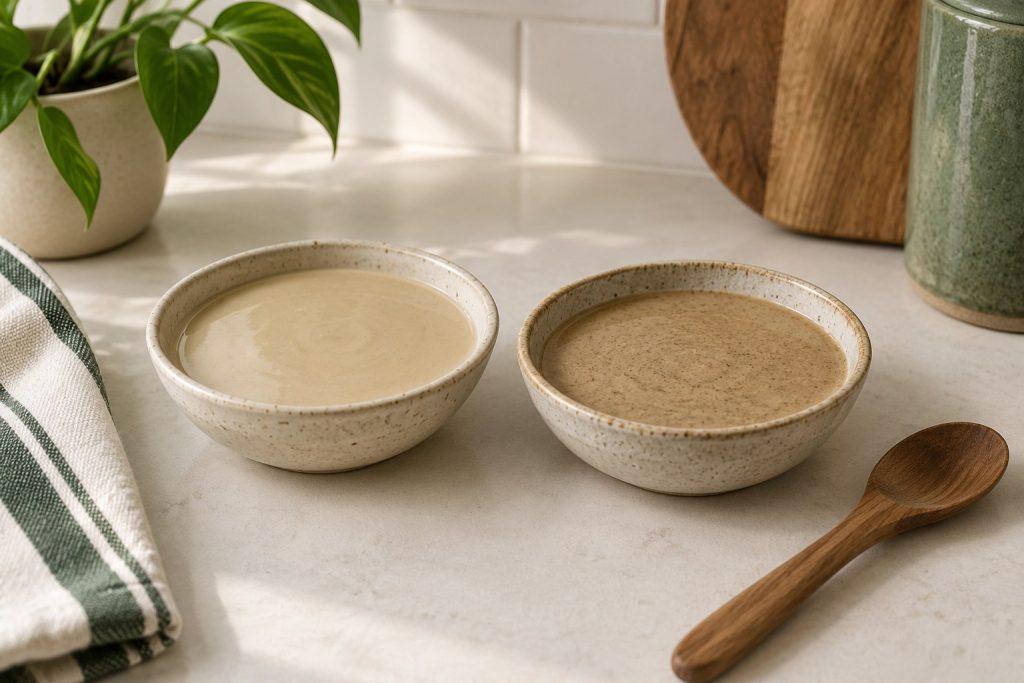
Check the wording on the jar
Meridian describes its light tahini as made from hulled sesame. Clearspring describes its whole-sesame tahini as unhulled. Look for these explicit terms; color alone is a weaker guide because the product’s other processing details also matter.
Expect a possible flavor difference
Clearspring describes its unhulled product as having a stronger, more distinctive flavor. Use the recipe’s specified style when possible, especially in a simple dressing where tahini is prominent. Do not assume every brand will taste identical.
Stir before measuring
Both producers advise stirring their products; Meridian explains that natural oil separation can occur. Follow the jar’s instructions and mix the paste before taking a recipe portion. Scooping only the oil layer is not equivalent to measuring the mixed product.
Compare actual nutrition labels
Use the same weight basis and check added ingredients when comparing jars. The words whole or light do not by themselves establish a universally healthier choice. Both examples are sesame products; removing the hull does not make tahini suitable for someone avoiding sesame.
Sources
Related reading
Tahini vs Peanut Butter: Flavor, Ingredients, and Substitutions
How to Compare Hummus: Ingredients, Protein, and Portions
Related reading
Why Is There Oil on Top of My Tahini?
Related reading
About this article: an introductory editorial draft. Not yet independently reviewed by a fitness professional.