Light vs Dark Brown Sugar: What Changes in a Recipe?
In common US baking products, dark brown sugar contains more molasses than light brown sugar. It generally gives a deeper color and stronger molasses flavor. They can often substitute for each other, but the finished flavor and appearance may change.
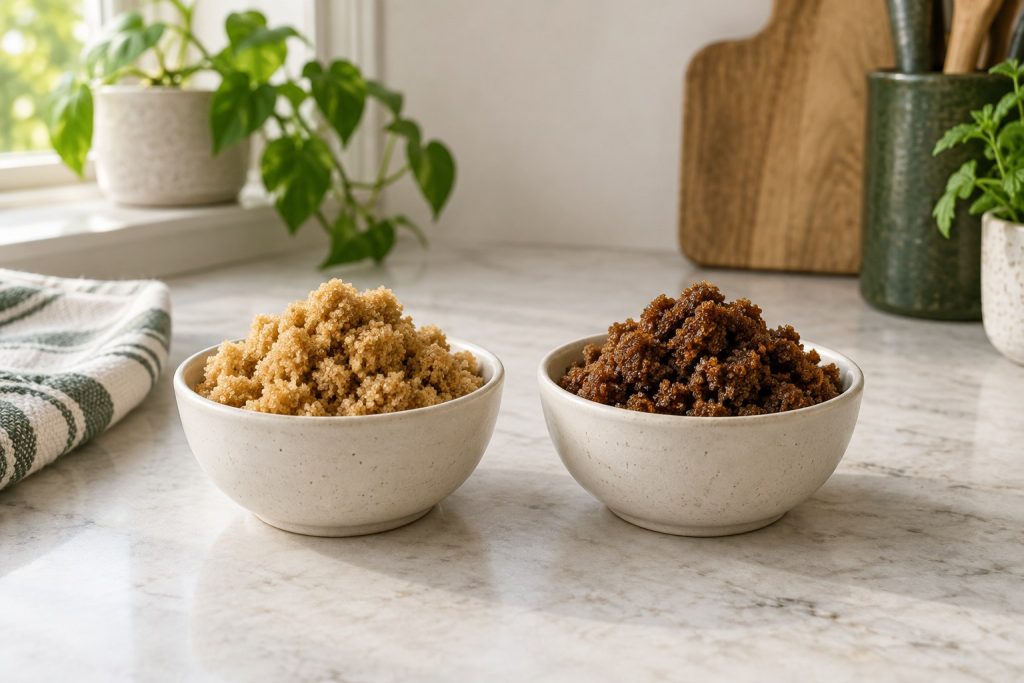
Start with the recipe’s choice
King Arthur explains that light and dark brown sugar usually work interchangeably in its baking context. If the recipe names one, use that for the closest intended result. A delicate flavor may make the difference more noticeable.
Keep the measurement method
Follow the specified weight, or the author’s volume-measuring method when no weight is supplied. If the recipe asks for packed brown sugar, a loosely filled cup is a separate measurement change. Switching color does not justify changing the quantity.
Do not confuse coarse sugars
Demerara and turbinado are not simply alternate names for moist light brown sugar. King Arthur distinguishes these sugar types and their textures. Read the product description before substituting a coarse crystal product into a recipe developed for soft brown sugar.
Avoid a color-based health ranking
Darker color is useful information about flavor, not a reason to treat the sugar as a different food group. Compare the ingredient and portion you actually use. For repeatable baking, note the product and any substitution beside the recipe.
Sources
King Arthur Baking; King Arthur Baking.
Related reading
Salted vs Unsalted Butter in Baking: What Should You Adjust?
How to Measure Flour Without Packing Too Much into the Cup
Related reading
Powdered vs Granulated Sugar: Why Texture Matters in Baking
Related reading
What Does Packed Brown Sugar Mean in a Recipe?
Related reading
Unsulphured and Blackstrap Molasses: Two Different Label Clues
About this article: an introductory editorial draft. Not yet independently reviewed by a fitness professional.