Panko vs Regular Breadcrumbs: Choose the Texture First
Panko and regular dry breadcrumbs can give different textures. Panko is typically larger and flakier; fine crumbs form a more compact coating. Choose according to whether the recipe needs a crisp topping, an even coating or a binder, then check the actual ingredients.
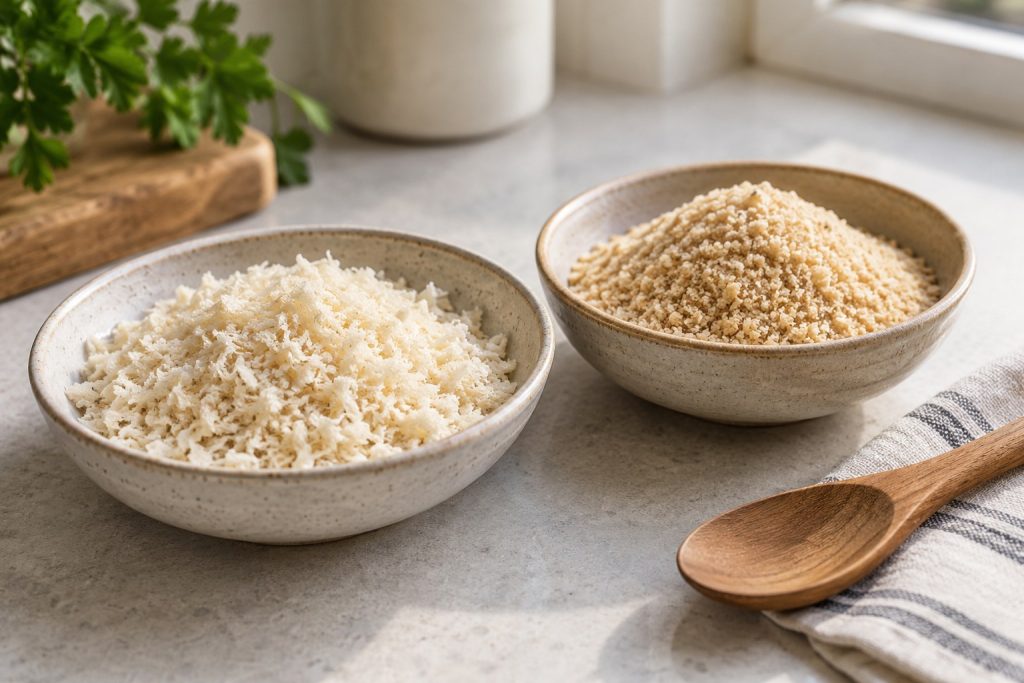
Look at the crumb shape
Kikkoman describes its panko as larger, lighter flakes made from crustless bread. That product can create a visibly different coating from fine breadcrumbs. Do not assume that equal-looking bowlfuls behave identically when packed or mixed into food.
Separate plain from seasoned
An unseasoned crumb and an herb-seasoned blend can add different amounts of salt and flavor. Read the label before adding the recipe’s other seasonings. The word panko does not establish a fixed sodium content across brands.
Check wheat and gluten
The cited Kikkoman original panko contains wheat. The company also offers a separate rice-based gluten-free coating. Panko is therefore not automatically gluten-free; use an explicitly suitable product when that requirement matters.
Match the recipe role
For a topping, changing crumb size mainly changes the surface texture; in a binder, absorption and the mixture’s consistency matter too. Follow a tested recipe or its substitution notes. Compare nutrition using equivalent portions, including oil and other coating ingredients.
Sources
Related reading
About this article: an introductory editorial draft. Not yet independently reviewed by a fitness professional.