Natural vs Dutch-Process Cocoa: Which Does Your Recipe Need?
Natural cocoa and Dutch-process cocoa differ in acidity because Dutch-process cocoa is treated with alkali. That can affect a recipe’s flavor, color and leavening. Use the type specified, especially in baking, rather than assuming every unsweetened cocoa powder behaves the same.
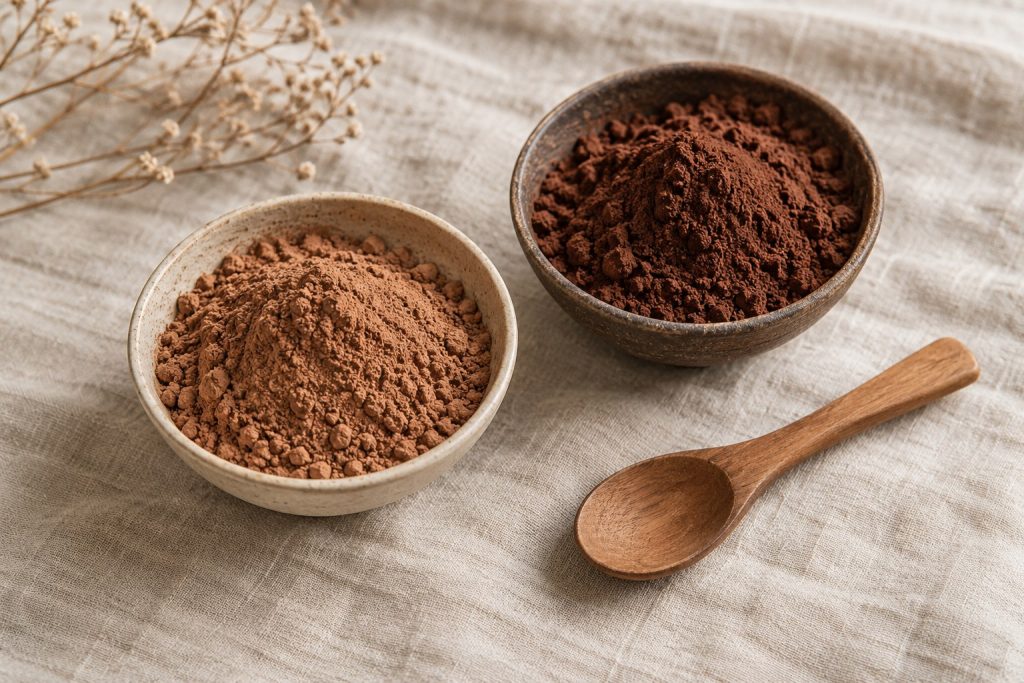
Identify the processing on the label
Look for Dutch-process, alkalized or processed-with-alkali wording. Color can offer a clue but is not a reliable substitute for the label. A sweetened hot-chocolate mix is a separate product and should not be treated as plain cocoa.
Consider the whole leavening system
King Arthur explains why natural cocoa often appears in recipes using baking soda. Other acidic ingredients and baking powder can also matter. Do not change the cocoa or leavener using a universal rule without considering the complete recipe.
Be more flexible where structure allows
In a drink or a preparation without chemical leavening, flavor and color may be the main differences. Follow a tested recipe and adjust preference within that context. This is different from assuming a delicate cake will rise the same after an untested swap.
Keep the nutrition comparison separate
Compare unsweetened products at the same quantity and check added ingredients. Darker color is not a measure of overall health value. Store the powder sealed as directed and label any transferred container with its cocoa type.
Sources
King Arthur Baking; King Arthur Baking.
Related reading
Cocoa Powder vs Hot Chocolate Mix: Why They Are Not Interchangeable
About this article: an introductory editorial draft. Not yet independently reviewed by a fitness professional.