Before Inflating an Exercise Ball: Check the Model and Plug
Inflate an exercise ball according to its own instructions, not until it feels as hard as possible. Confirm the model, intended size, pump connection and closure before adding air. A ball that loses air or shows damage needs assessment before anyone exercises on it.
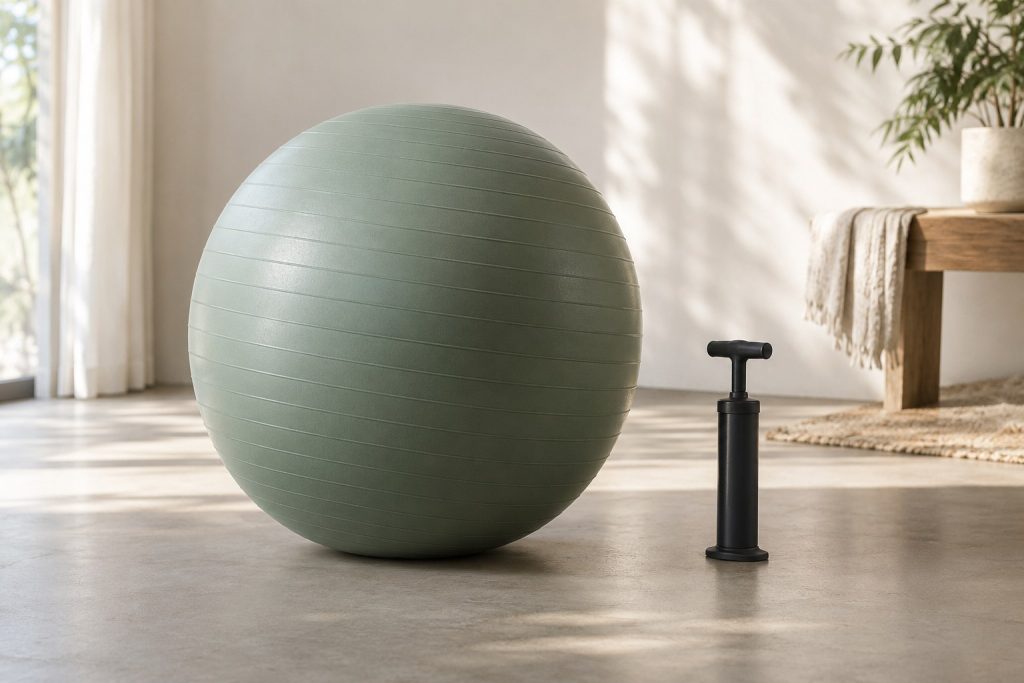
Find the instructions before pumping
Read the maker’s target size and inflation sequence, including any waiting period or later top-up it specifies. These details vary between products. Do not use another ball’s color, firmness or pump-stroke count as your measurement.
Use the intended connection
Performance Health describes using a high-volume pump and replacing the stopper promptly on its THERABAND Pro Series balls. Use the correct adapter and plug for your model. Avoid sharp improvised tools that could damage the opening while removing a stopper.
Inspect the surface and closure
Check for abrasion, distortion, cuts and air leakage before use. Performance Health advises replacing damaged THERABAND balls and says they should not be patched. Repeated inflation does not resolve a damaged wall or an unsuitable closure.
Separate inflation from permission to exercise
Follow the ball’s load limits and permitted activities, and clear the floor of sharp objects. An inflated ball is not automatically approved for loaded strength exercises; THERABAND specifically discourages using its exercise balls with free weights. Store according to the care guide.
Sources
Performance Health; Decathlon.
Related reading
What Size Exercise Ball Do You Need?
Home Gym Equipment for Beginners: What Do You Actually Need?
About this article: an introductory editorial draft. Not yet independently reviewed by a fitness professional.