Indoor vs Outdoor Pickleballs: Ask About the Court
Indoor and outdoor pickleballs are designed with different playing conditions in mind. Hole patterns, construction and feel can differ. Ask which ball your venue or group uses before buying; being under a roof does not by itself describe the court surface.
Start with the venue
Tell the organizer whether you are joining a gym-floor session or a dedicated hard court. Follow the session’s ball choice, including any event requirements. Practicing with the group’s usual ball removes an avoidable equipment change when you join a game.
Read the model, not the color
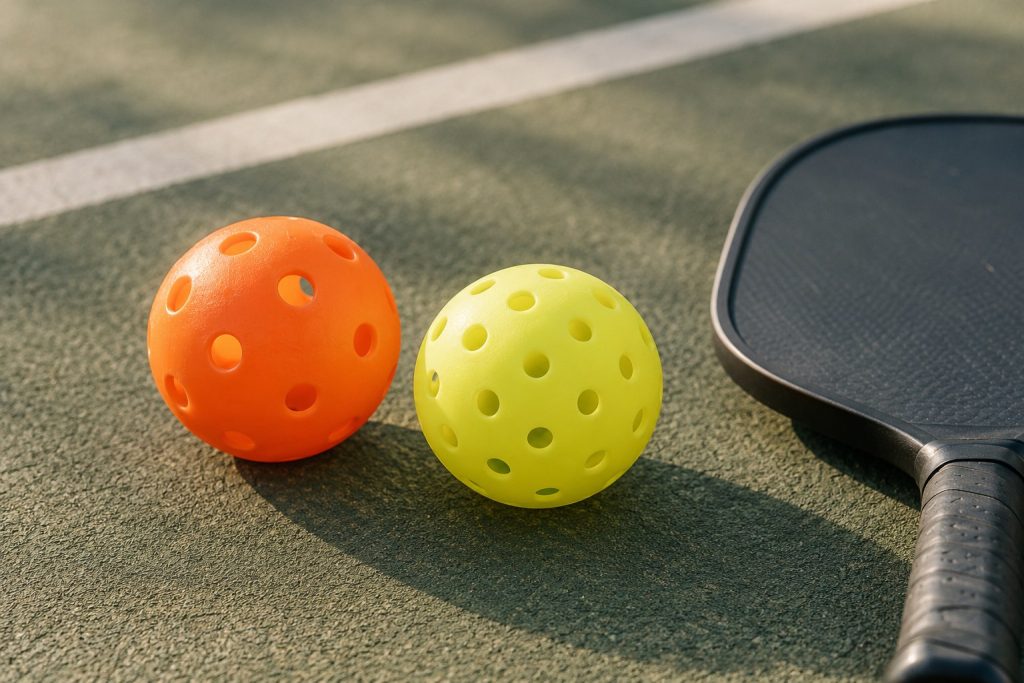
Franklin sells separate indoor and outdoor models with different designs. Both categories can come in multiple colors, so orange or yellow alone is not a reliable identification method. Keep the model name or packaging when sorting a mixed bag of balls.
Compare feel on the intended surface
Use a ball in the setting recommended for that product. Differences in bounce and flight are not a shortcut to judging a player’s ability. If a borrowed ball feels unfamiliar, ask about its type before assuming your paddle or technique is the problem.
Inspect before play
Look for cracks, obvious distortion and damaged holes, and replace a compromised ball. Store equipment as directed instead of leaving it loose under heavy gear. Product examples illustrate design differences; they do not establish a single best ball for every court.
Sources
Franklin Sports; Franklin Sports.
Related reading
Pickleball for Beginners: Plan Your First Session
What to Pack in a Gym Bag: A Beginner’s Checklist
Related reading
Pressurized vs Pressureless Tennis Balls: Match the Practice
Related reading
Basketball Sizes: The Number Describes More Than a Bigger Ball
About this article: an introductory editorial draft. Not yet independently reviewed by a fitness professional.