Jump Rope for Beginners: Start with Rhythm, Not Long Workouts
Begin jump rope with short practice bouts, a basic two-foot jump, and enough room for the rope to pass freely. Learn to turn the rope smoothly and clear it with small jumps before chasing a long workout. Repeated tripping often means you are learning coordination, not failing a fitness test.
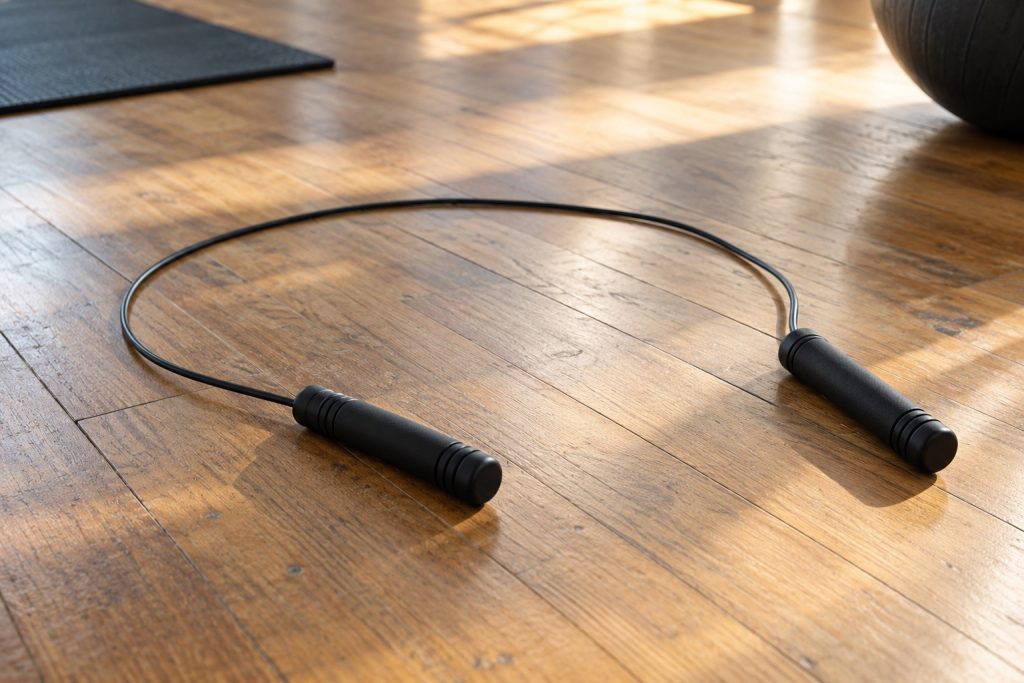
What do you need to get started?
Use a rope suited to your height and follow its adjustment instructions. Check clearance above, behind, and beside you, including ceiling fans and other people. Choose a level, non-slip area with an appropriate exercise surface and supportive footwear.
The American Council on Exercise’s jump-rope guide recommends a light rope for learning and describes a chest-height handle check when standing on its center. Treat sizing guidance as a starting point; rope design and your technique affect the final adjustment.
Which technique cues are useful?
ACE emphasizes relaxed shoulders, elbows near the body, turning primarily from the wrists, and keeping jumps low. You only need enough clearance for the rope to pass, rather than a large leap on every turn.
Practice one clean jump, reset, and repeat if linking jumps feels confusing. Then try a few consecutive turns. Looking for a smooth rhythm is more useful initially than adding tricks, crossing the rope, or copying the pace of an experienced athlete.
What could a first practice session look like?
This is a flexible example, not a required workout or a progression schedule:
| Part | Example |
|---|---|
| Prepare | Walk or march comfortably, then check the space and rope. |
| Practice | Try 10–15 seconds of easy jumps or a few single turns. |
| Reset | Pause long enough to regain comfortable breathing and rhythm. |
| Repeat if comfortable | Do a few short rounds, stopping before control deteriorates. |
Some beginners will need shorter attempts or a different activity. If jumping causes pain, stop rather than interpreting it as a cue to practice harder.
Why does the rope keep catching?
Check one variable at a time: rope length, hand position, timing, and available space. If the rope catches after your hands drift wider, reset the hand position before changing the rope. An instructor or a short recording of your own practice can help identify a repeatable pattern.
How should you add more work?
First make a short round repeatable. Then consider a small increase in practice time or rounds, rather than changing everything together. Jump rope involves repeated landings; it is different from lower-impact cardio. Use work-and-rest intervals and account for recovery between demanding sessions instead of assuming a compact piece of equipment requires little recovery.
Related reading
About this article: an introductory editorial draft. Not yet independently reviewed by a fitness professional.