Kosher Salt vs Table Salt: Why the Spoonful Changes
Kosher salt and table salt differ in crystal size and packing. Equal spoonfuls can contain different masses, so changing salts without adjusting a recipe can change saltiness. Kosher salt is not automatically a low-sodium alternative.
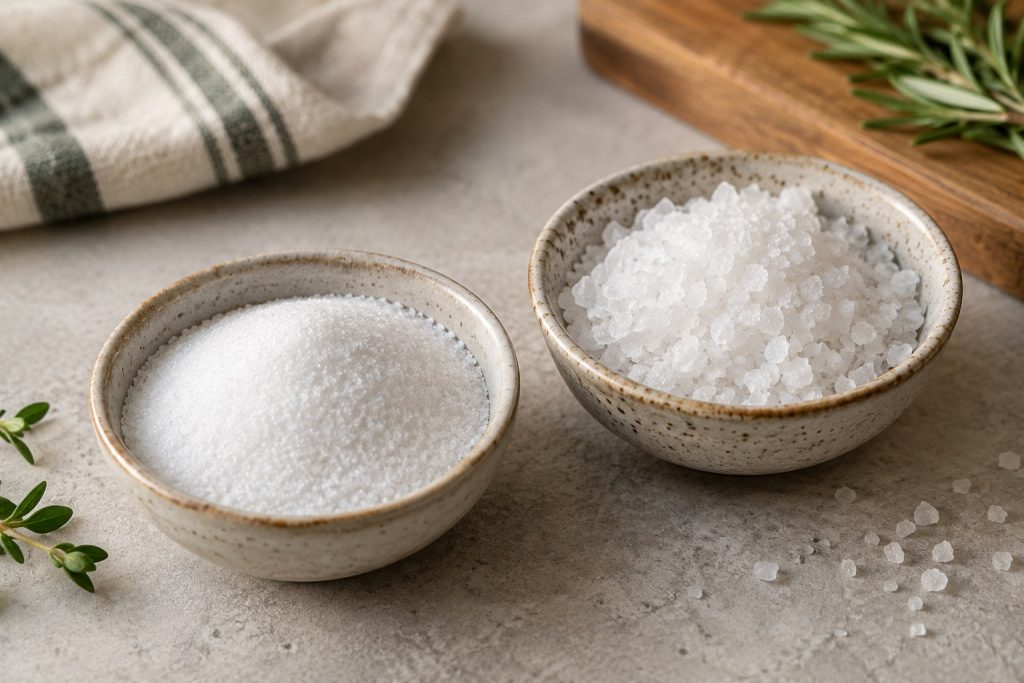
Check the named brand
Even kosher salts differ from each other. Morton publishes a conversion chart for its products; that chart is not a universal rule for every brand. When a recipe specifies a particular salt, keep that detail with the ingredient amount.
Use weight when supplied
If the recipe provides grams, weigh the specified amount with a suitable scale. For a volume-only recipe, consult a relevant product conversion rather than assuming equal spoonfuls. A coarse crystal leaves different spaces between grains than a fine one.
Read iodine and sodium separately
Table salt may be iodized or non-iodized; check the label. Crystal size does not tell you whether iodine is present. Compare sodium for the amount actually used, not just unequal labeled spoon servings. A specialty name is not a nutritional exemption.
Keep preservation recipes exact
For pickling, curing or other preservation, use a tested recipe and its specified salt and quantities. Do not make casual substitutions based on taste. For ordinary cooking, record which product you used so a successful result is easier to repeat.
Sources
Morton Salt; Morton Salt; FDA.
Related reading
Teaspoon vs Tablespoon: Avoid a Recipe Mix-Up
How to Use the Tare Button on a Kitchen Scale
Related reading
About this article: an introductory editorial draft. Not yet independently reviewed by a fitness professional.