Massage Ball vs Foam Roller: What Changes in Use?
A massage ball usually provides a smaller contact area than a cylindrical foam roller. A roller can cover a broader area, while a ball can feel more localized. Shape changes handling; it does not establish which tool produces better recovery.
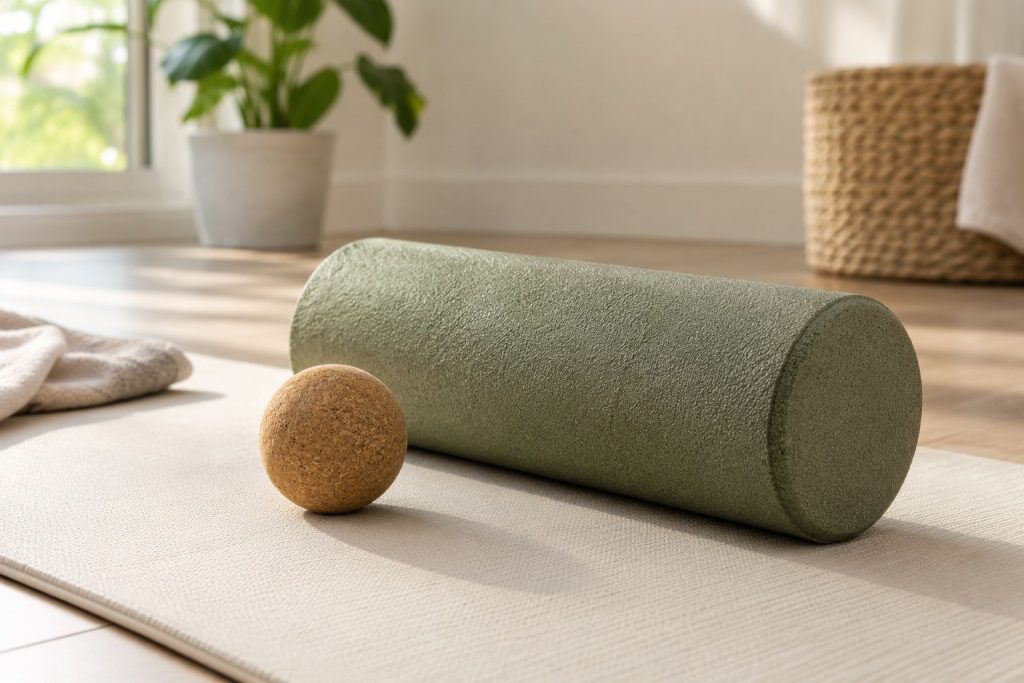
Compare size as well as shape
Massage balls come in different sizes, and some large models cover broad areas. TriggerPoint’s product ranges illustrate this variation. Compare diameter, material and firmness instead of assuming every ball is small and hard or every roller is soft.
Choose a controllable setup
Use the tool according to its instructions on a stable surface. Start with light pressure that you can reduce easily. A setup requiring awkward balancing is a poor place to learn; changing body position can matter as much as buying a firmer tool.
Do not chase pain
More pressure is not automatically more useful. Stop if use causes sharp pain, numbness or worsening symptoms, and avoid pressing directly on injured tissue. Persistent or unexplained pain needs assessment rather than repeated attempts to force it away with a harder object.
Treat it as optional equipment
Neither tool replaces training, sleep or an appropriate rehabilitation plan. Choose the one you can handle comfortably for the intended use, or skip it if it adds no value. Clean it as directed and inspect surfaces for damage before reuse.
Sources
Related reading
Soft vs Firm Foam Rollers: Choose Comfort, Not Maximum Pressure
About this article: an introductory editorial draft. Not yet independently reviewed by a fitness professional.