Fabric vs Rubber Resistance Bands: Compare the Actual Loop
Fabric and rubber resistance loops can feel and stretch differently, but material alone does not tell you the resistance. Compare the specific band’s dimensions, intended exercises and load guidance. A fabric covering does not guarantee the absence of latex.
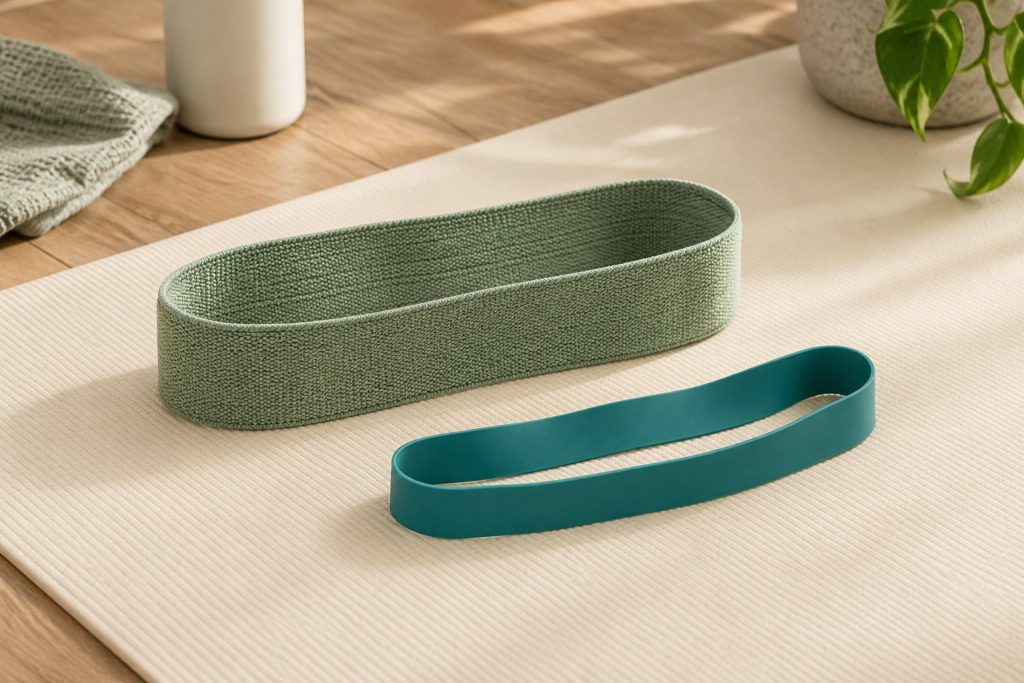
Read the material description
Decathlon lists latex rubber in the composition of one of its fabric glute bands. Other products use different materials. If latex must be avoided, look for an explicit latex-free specification rather than relying on the woven appearance or the word fabric.
Match the loop to the movement
A short, broad loop designed for leg exercises is not interchangeable with a long band for rows or presses. Check the starting length and permitted stretch. Use a band intended for the exercise instead of forcing a short loop into an unsuitable setup.
Compare resistance carefully
Light, medium and heavy are not universal standards across brands. Resistance changes as a band stretches, and a wider band is not automatically harder at every position. Use the manufacturer’s information and choose a setup you can control through the planned movement.
Check condition and care
Inspect rubber surfaces, fabric seams and any grippy lining before use. Stop using a damaged band and follow washing and storage instructions. Do not assume fabric can be machine-washed or stretched farther than rubber simply because it feels sturdier.
Sources
Decathlon; Performance Health / THERABAND.
Related reading
About this article: an introductory editorial draft. Not yet independently reviewed by a fitness professional.