How to Clean a Food Thermometer Between Checks
A food thermometer can transfer contamination if its probe is reused without cleaning. USDA advises washing food thermometers with hot, soapy water or following the manufacturer’s directions. Cleaning the probe and protecting the electronic housing are separate tasks.
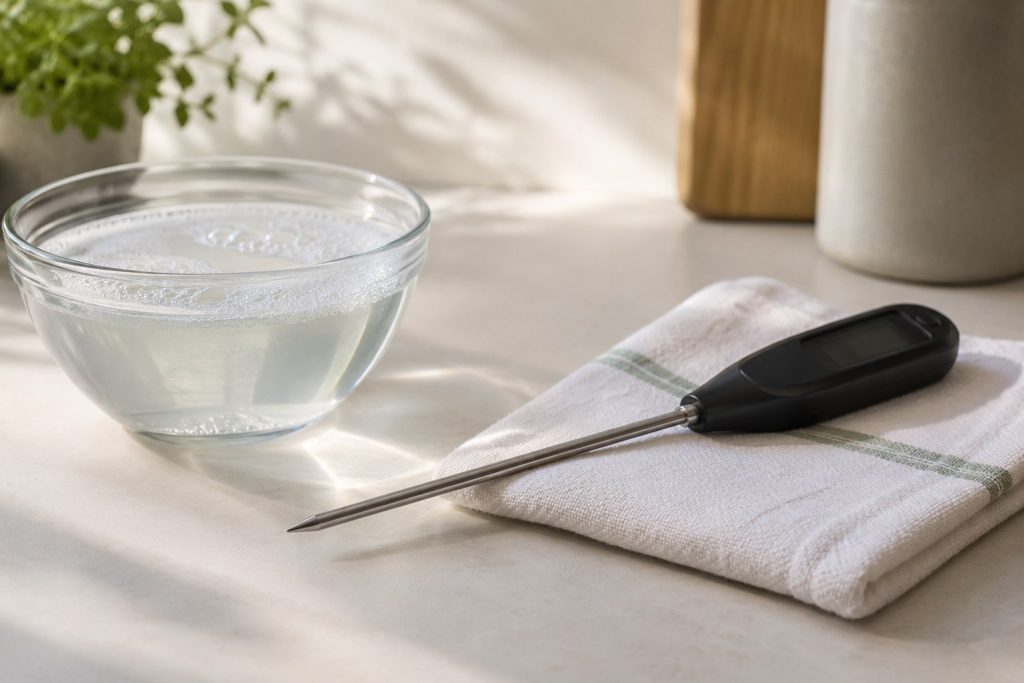
Identify the washable parts
Read the manual before soaking or rinsing the instrument. A waterproof probe does not necessarily mean the display, cable connector or battery compartment can be submerged. Do not assume dishwasher safety from a metal exterior.
Clean between raw and cooked checks
After checking raw or undercooked food, clean the food-contact portion before another use. Remove visible residue, wash as instructed, rinse where appropriate and dry with a clean method. Follow any additional sanitizing directions for that model.
Store the probe clean
Allow parts to dry as directed before replacing a protective cover. A dirty sheath can recontaminate a clean probe. Keep the thermometer away from raw-food packaging and clean the storage cover according to its material and instructions.
Keep cleaning separate from accuracy
A clean thermometer can still give an inaccurate reading if damaged or used incorrectly. Follow the model’s placement, response-time and accuracy-check instructions. Use the appropriate food temperature guidance; cleaning alone does not verify that a meal reached a safe temperature.
Sources
Related reading
About this article: an introductory editorial draft. Not yet independently reviewed by a fitness professional.