How to Clean Gym Equipment Without Damaging It
Clean gym equipment using the equipment manufacturer’s care instructions and a compatible product. In a shared gym, use the supplies and process the facility provides. Cleaning removes dirt; disinfecting uses a suitable product to kill remaining germs. A quick wipe is not automatically effective disinfection.
What is the difference between cleaning and disinfecting?
The CDC’s facility guidance distinguishes cleaning surfaces from disinfecting them and explains when disinfection is appropriate. When disinfection is needed, remove visible soil first and follow the disinfectant label, including its required wet contact time.
These are related but separate jobs. Removing a patch of sweat from a bench tells you that visible moisture has been wiped away. It does not tell you whether a product was suitable for the target germ, whether enough was applied, or whether it remained wet long enough.
What should you do in a shared gym?
- Find the facility’s cleaning station and posted instructions.
- Use the approved product on the surfaces the instructions allow.
- Deal with visible sweat or soil according to the facility’s process.
- Where disinfection is required, respect the product’s full contact time.
- Dispose of used wipes or return reusable cloths where directed.
If the supplies are empty or instructions are unclear, ask staff. Do not substitute a household chemical from your bag or mix products to make a “stronger” cleaner. Report damaged upholstery or contamination that needs staff attention rather than trying to improvise a repair or specialized cleanup.
Why does the surface material matter?
A product suitable for one hard surface may damage another finish. For example, Life Fitness specifies compatible cleaners and application methods for its equipment, including applying cleaner to a cloth. Those directions are product-specific, not permission to use the same cleaner on every brand. The equipment manual and product label need to agree; a disinfectant claim does not establish compatibility with every screen, rubber grip, or upholstered pad.
| Equipment part | Check before cleaning |
|---|---|
| Console or touchscreen | Approved cleaner and directions for applying it safely |
| Upholstered bench | Material compatibility and whether the covering is damaged |
| Metal handles or weights | Finish compatibility and any drying requirements |
| Mat or resistance band | Product-specific washing, soaking, and storage instructions |
Keep liquids away from openings and electrical components, and follow shutdown instructions when applicable. Do not assume that soaking, steam, or a dishwasher is acceptable for a mat or band.
What does contact time mean in practice?
If a disinfectant label specifies a wet contact period, the surface must remain wet for that period. Wiping it dry immediately can defeat the intended use. Follow ventilation and protective-equipment directions as well. CDC also advises against mixing cleaning products and recommends secure storage.
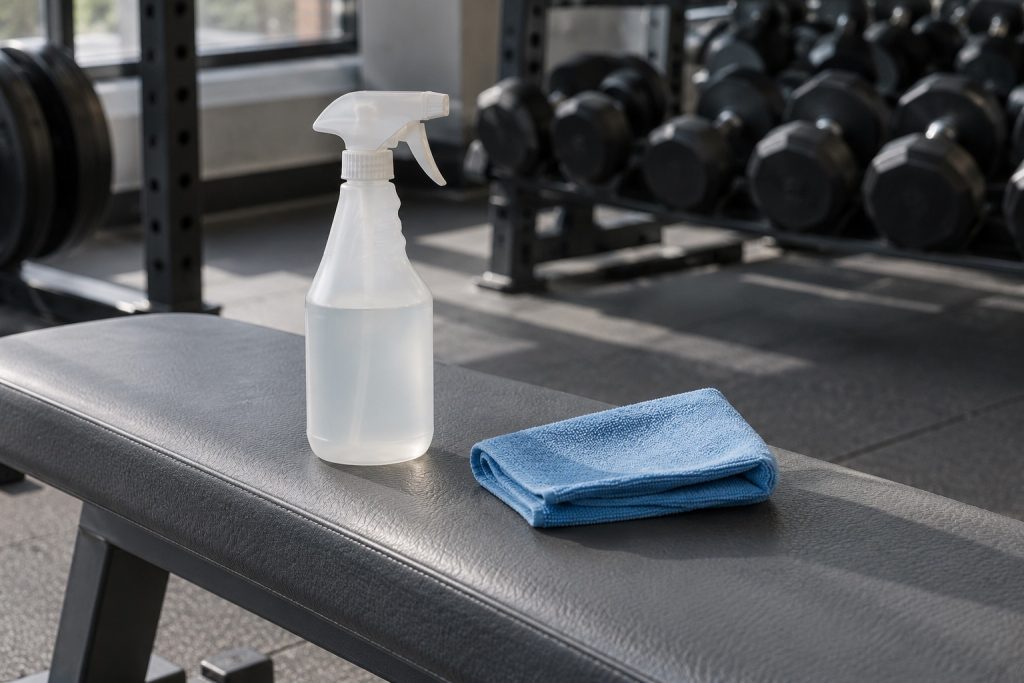
Use labeled products with readable directions. The cover illustration is decorative; it is not a recommendation to store an unidentified liquid in an unmarked bottle.
How can you make home equipment care repeatable?
Keep the relevant manuals and an approved cleaner together, and note any equipment-specific exceptions. A short checklist for your own home gym equipment is easier to follow than guessing each time. If you are new to a shared facility, read our first gym visit guide for the wider routine.
Related reading
About this article: an introductory editorial draft. Not yet independently reviewed by a fitness professional.