Potatoes vs Sweet Potatoes: Compare the Whole Dish
Potatoes and sweet potatoes can both serve as the starchy part of a meal. Their flavors and nutrients differ, but preparation and portion matter too. Compare similar cooked dishes rather than treating a baked sweet potato and a portion of fries as a fair test of the vegetables.
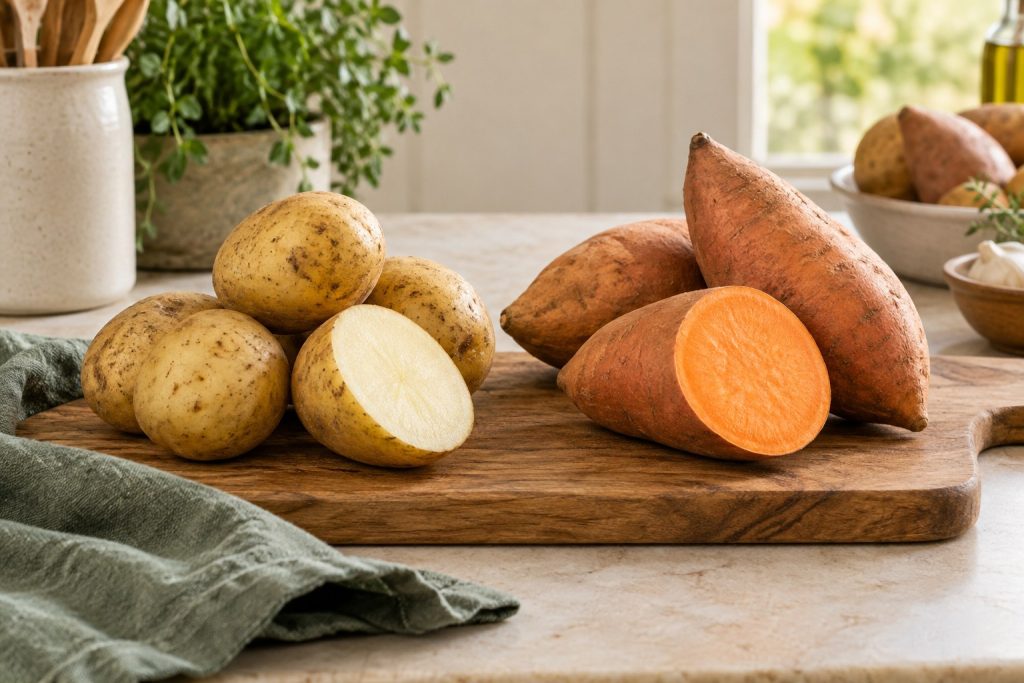
What does the color tell you?
Orange-fleshed sweet potatoes provide beta-carotene, which the body can convert to vitamin A. Not every sweet potato has orange flesh, and color does not describe every nutrient. Ordinary potatoes also contribute nutrients. Use the specific variety and preparation when looking up food-composition information.
Match the cooking method
Boiled, baked, mashed, and fried versions are different comparisons. Oil, butter, cream, sauces, and coatings become part of the dish. If you want to compare the vegetables themselves, start with similarly prepared plain portions. Then account for the additions you actually enjoy rather than ignoring them.
Avoid comparing by one whole potato
Individual potatoes vary considerably in size. A small sweet potato and a large ordinary potato are not equivalent portions because each counts as one. Use a comparable cooked weight when consulting nutrition data. Check whether that entry includes skin and whether it describes cooked or raw food.
Choose the flavor that fits the meal
Sweet potatoes can bring sweetness, while ordinary potato varieties offer different textures for mashing or roasting. Build the rest of the meal around your preferences and needs. Neither vegetable guarantees weight loss or a particular blood-sugar response. Specific medical meal plans need their own portion guidance.
Sources
Harvard Nutrition Source; Harvard Nutrition Source; FDA.
Related reading
Brown Rice vs. White Rice: More Than a Color Difference
Should You Weigh Food Raw or Cooked? Match the Food to the Entry
Related reading
How to Store Potatoes Away from Light and Heat
Related reading
About this article: an introductory editorial draft. Not yet independently reviewed by a fitness professional.