How to Compare Hummus: Ingredients, Protein, and Portions
Hummus is commonly made from chickpeas, tahini, and other ingredients, but recipes vary. A small serving of dip is not nutritionally identical to a bowl of chickpeas. Compare the product and the amount you use instead of assuming every hummus provides the same protein or energy.
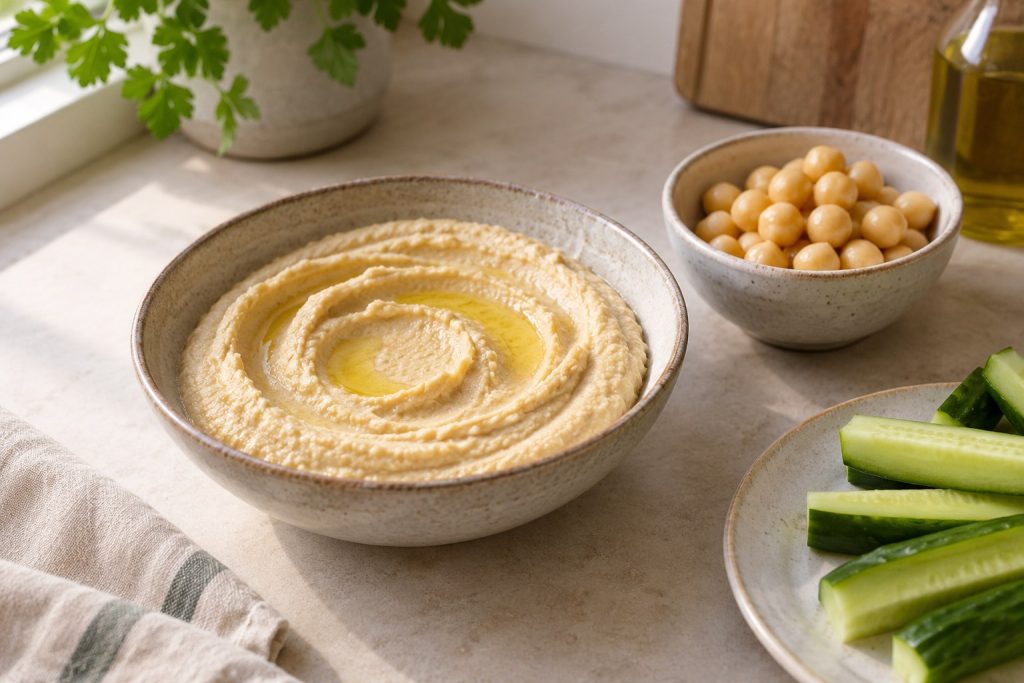
Which ingredients change the comparison?
Check the chickpea base, tahini, added oil, water, and flavorings. Their proportions affect texture and the nutrition panel. Tahini is made from sesame, so check allergen information when needed. A topping or flavored version may have a different recipe from the plain one. Compare the actual tubs, not only their brand names.
Is hummus a high-protein meal by itself?
Read the grams of protein for your portion rather than relying on the presence of chickpeas. A thin spread and a large bowl contribute different amounts. Hummus can be part of a meal containing other protein foods, vegetables, and bread or grains. Its role depends on the meal you build, not on a universal label of good or bad.
How do you compare serving sizes fairly?
Use the same weight when comparing products, then adjust to the amount you actually eat. A package’s spoon-based serving can be smaller than your usual scoop. Check sodium as well as protein and energy. If weighing helps clarify the label, tare the empty dish first; routine meals do not require constant measuring.
What about homemade hummus and leftovers?
For homemade hummus, calculate from the full recipe and the portion of the finished batch rather than copying a random store label. Oil poured on top and ingredients blended in both count. Use clean utensils, refrigerate as appropriate, and follow storage guidance for the recipe or package. Choose a tub size that fits how quickly you use it.
Sources
University of Maryland Extension; U.S. Food and Drug Administration.
Related reading
Lentils vs. Chickpeas: Which Fits Your Meal?
How to Read a Nutrition Label for Protein and Serving Size
Related reading
Tahini vs Peanut Butter: Flavor, Ingredients, and Substitutions
Related reading
About this article: an introductory editorial draft. Not yet independently reviewed by a fitness professional.