Cork vs Foam Yoga Blocks: Firmness, Weight, and Fit
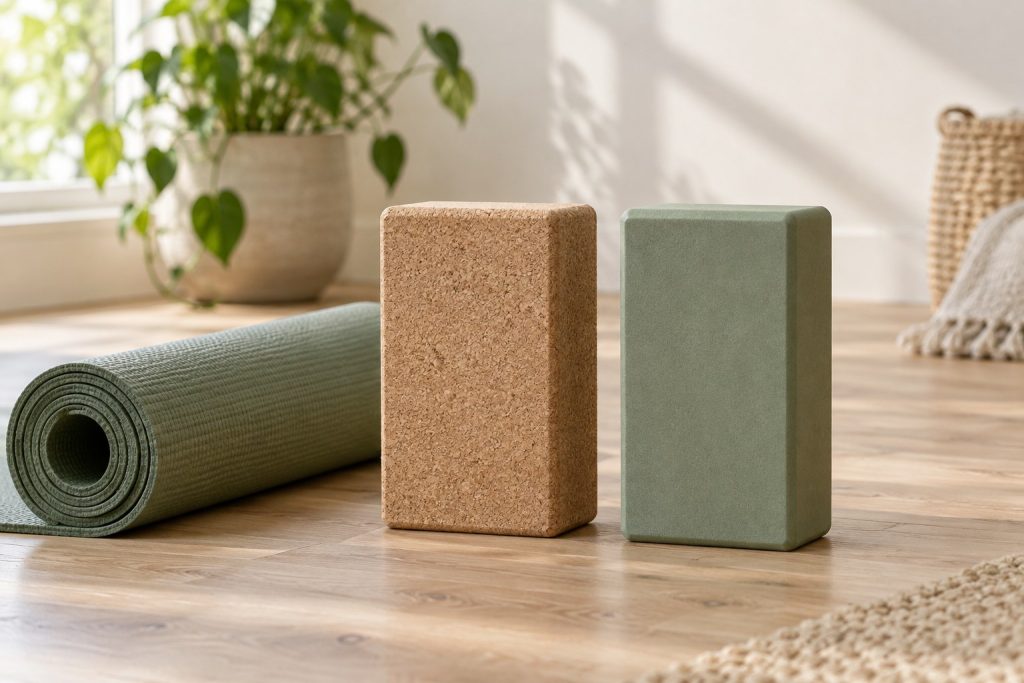
Cork yoga blocks are often heavier and firmer than foam blocks of similar size. Foam is commonly lighter and can feel softer against the body. Neither material is automatically better: dimensions, stability, and the way you use the block matter too.
When might cork be useful?
Consider a firm block when you want a steady hand support and dislike a compressible feel. Check the actual model: material alone does not establish its dimensions or performance. Try it on the floor where you practise and confirm that it sits flat without rocking. A heavier block can also be less convenient to carry to class.
When might foam be more comfortable?
Foam can be convenient for travel or gentle supported positions where the contact surface matters. Density varies, so not every foam block compresses equally. Press the sample and compare its feel with another model. Softness should not come at the expense of a stable support for the position you intend to practise.
How should you compare the sizes?
Check length, width, and height instead of relying on a photograph. Turning a rectangular block changes its support height and base area. If you need a pair, choose matching dimensions and a similar feel. Ask an instructor which orientation suits the pose; stacking loosely to reach higher is not a substitute for an appropriate setup.
What about cleaning and wear?
Follow the maker’s cleaning guidance and allow the block to dry before storage. Avoid assuming that soaking or a strong disinfectant suits every finish. Check for crumbling, splits, deformation, or a slippery surface. Replace a damaged block when it no longer gives dependable support rather than trying to compensate with more pressure.
Sources
Related reading
Yoga Blocks for Beginners: Choosing and Using Support
Yoga Mat vs. Exercise Mat: Choose for the Movements You Do
Related reading
About this article: an introductory editorial draft. Not yet independently reviewed by a fitness professional.