Lentils vs. Chickpeas: Which Fits Your Meal?
Lentils and chickpeas are pulses that provide plant protein and fiber. Their useful differences are often practical: size, texture, cooking method, and the recipe you want to make. Compare foods in the same prepared state rather than choosing a winner from unrelated dry and cooked nutrition figures.
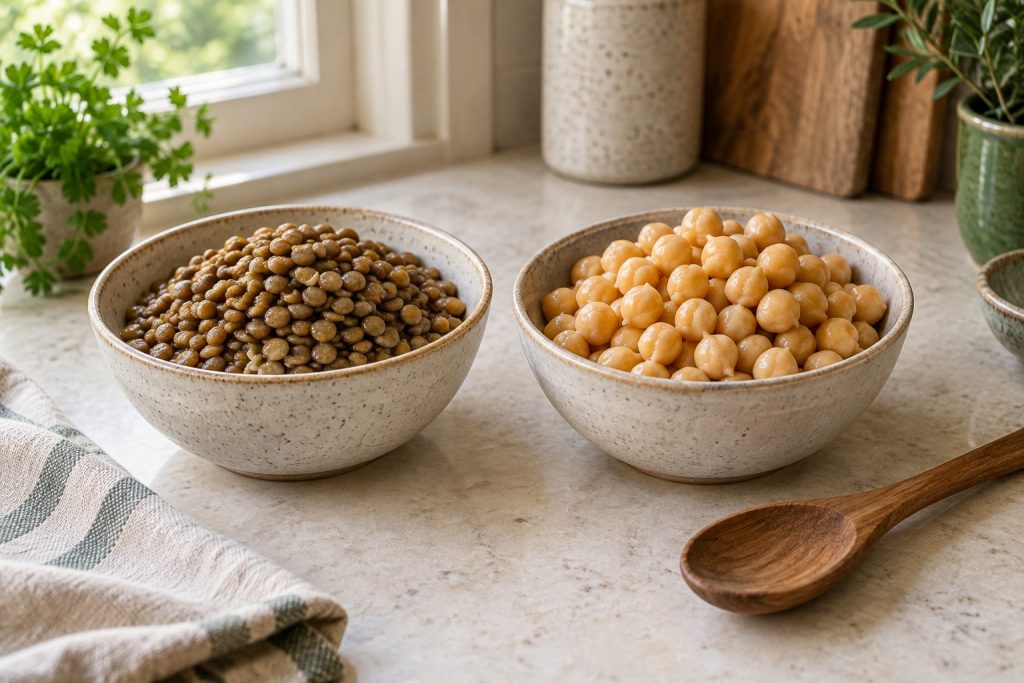
How do their textures differ?
Lentils are small and lens-shaped; chickpeas are larger and rounder. Lentil varieties behave differently, so check whether a recipe calls for whole or split lentils. Choose the texture you need for a soup, salad, or blended dish. Do not assume that swapping either ingredient into a recipe preserves its final consistency.
Is the preparation time the same?
No single cooking time covers every dried, canned, or ready-cooked product. Read the package’s soaking and cooking instructions and check the recipe before starting. A can of ready-cooked chickpeas and a bag of dried lentils represent different preparation tasks. Do not treat soaking alone as a substitute for cooking a dried product.
How should you compare protein and portions?
Use equal cooked weights, or compare dry weights with dry weights. Account for draining when the label specifies a drained serving. Include oil, sauces, or other additions in the final dish. If one portion is larger, say so: it may provide more protein simply because you are serving more food.
Which is easier to keep in your routine?
Choose a form you can prepare reliably and enjoy. Ready-cooked versions can help when time is limited; dry products require more planning. Compare cost per usable portion, not just package weight, and follow storage directions after cooking or opening. Rotate ingredients when useful rather than making one pulse a compulsory part of every meal.
Sources
Harvard Nutrition Source — pulses; Harvard Nutrition Source — chickpeas.
Related reading
Canned vs. Dried Beans: Compare Convenience, Sodium, and Cost
Tofu vs. Tempeh: A Practical Guide for Everyday Meals
Related reading
How to Compare Hummus: Ingredients, Protein, and Portions
Related reading
About this article: an introductory editorial draft. Not yet independently reviewed by a fitness professional.