Kickboard vs. Pull Buoy: What Each Swimming Aid Does
A kickboard supports an upper-body position while you practice kicking. A pull buoy is usually placed between the thighs to help support the lower body during an arm-focused drill. They change the task you practice; neither replaces learning to swim or provides the protection of a life jacket.
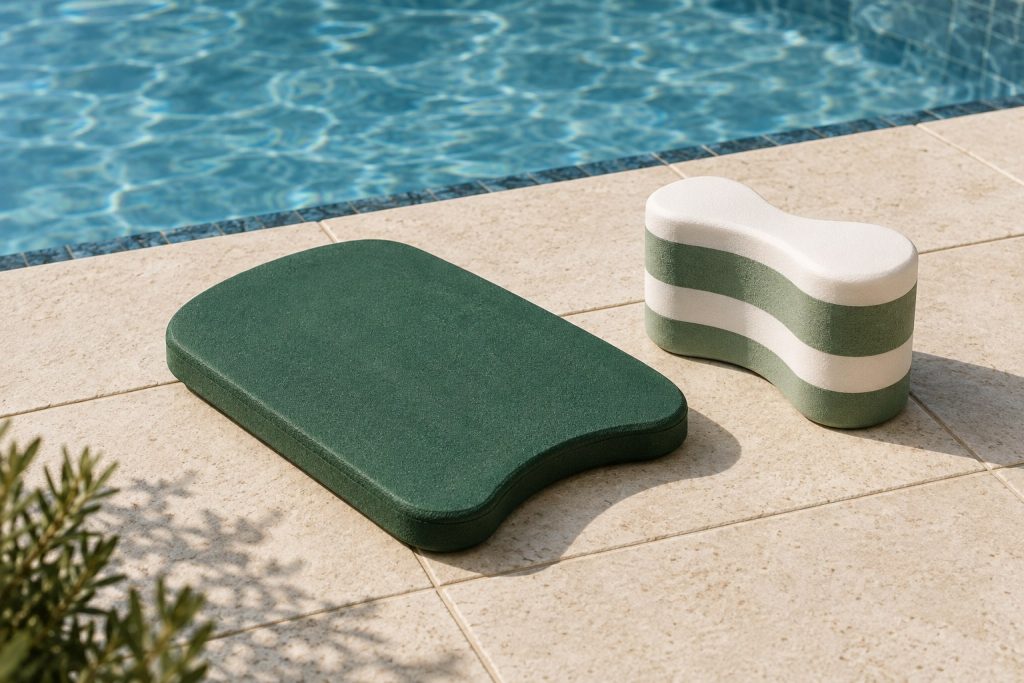
When is a kickboard useful?
A coach may use a kickboard to separate kicking practice from the full stroke. The exact hold, head position, and breathing pattern depend on the drill. Ask for a demonstration rather than assuming every board exercise uses the same setup.
If holding the board in front of you is uncomfortable, tell the instructor. A different drill or position may be more appropriate. Finishing a drill at any cost is less useful than understanding the movement you are practicing.
What does a pull buoy change?
US Masters Swimming describes a pull buoy as a float held between the thighs to raise the lower body. This supports an arm-focused drill and changes the balance demands compared with normal swimming.
The buoy does not show whether your unaided body position has improved. Compare like with like when recording times: a swim with a buoy and a swim without one are different tasks. Do not add paddles or other equipment simply because another swimmer uses them.
Do beginners need both?
No. Basic lap swimming does not require a collection of training aids. Ask whether the pool provides equipment and whether your instructor wants you to use it. Borrowing a suitable aid for a lesson can be more informative than buying before you know the drill.
Practice in a supervised swimming area appropriate to your ability. Training floats are not rescue equipment. If you cannot swim safely without one, begin with swimming instruction rather than relying on it for an independent lap workout.
How do you use them in a shared lane?
Check the pool’s rules and choose a lane appropriate to your actual speed during the drill. Kicking and pulling can change your pace. Leave equipment in the designated area so it does not block the wall or the poolside walkway.
Keep the drill’s purpose in your session notes, alongside whether equipment was used. That makes progress easier to interpret and helps you discuss the next practice with your instructor.
Sources
Related reading
Lap-Swimming Etiquette: How to Share a Pool Lane
Related reading
Short vs Long Swim Fins: Choosing a Pair for Pool Practice
Related reading
About this article: an introductory editorial draft. Not yet independently reviewed by a fitness professional.