Mat Pilates vs. Reformer Pilates: A Beginner’s Guide
Mat Pilates uses a mat and sometimes small props. Reformer Pilates uses a machine with a moving carriage and adjustable springs. Both require learning controlled movement. For a beginner, the instructor, class level, and opportunity to ask questions matter more than choosing the most elaborate equipment.
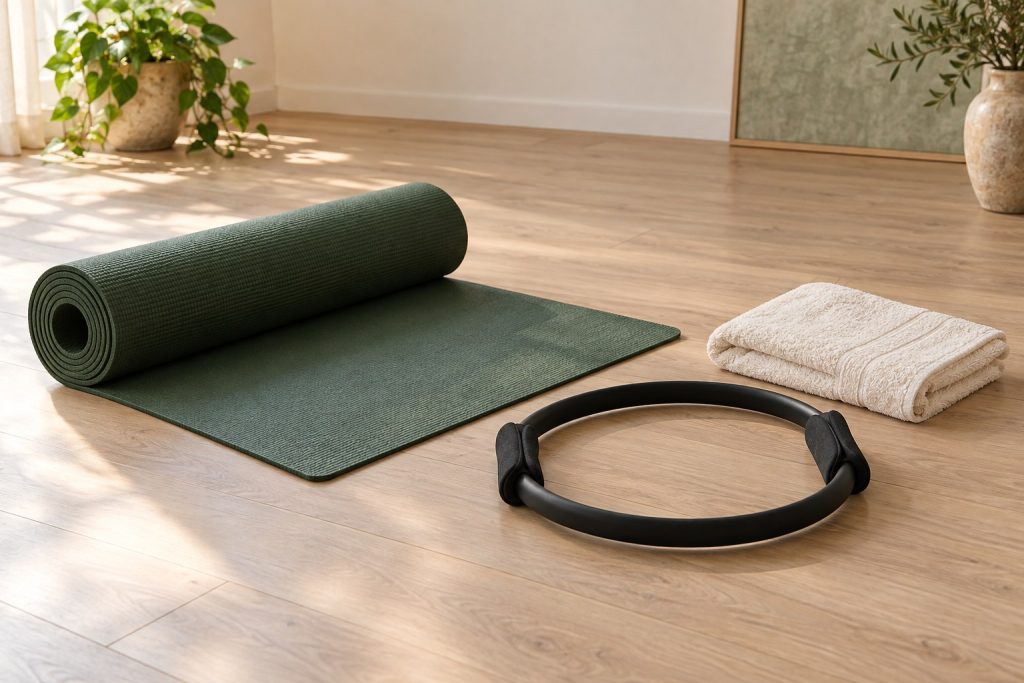
What changes between the two formats?
On the mat, your body position and gravity help determine the challenge. Small props may change support or resistance. On a reformer, carriage movement, spring settings, and attachments also affect the exercise.
Cleveland Clinic describes both mat and equipment-based Pilates and emphasizes learning the movements properly. Springs can assist or resist a movement depending on the exercise, so a higher spring setting does not always mean the same kind of increased difficulty.
Is mat Pilates easier?
Not necessarily. A demanding mat exercise can be harder than a supported reformer variation. Difficulty depends on the movement, range, support, pace, and your experience. The format name alone does not identify a beginner class.
Look for an introductory session that explains setup and offers alternatives. Tell the instructor that you are new. If you need adaptations for an injury or medical condition, ask in advance whether the class can accommodate your needs.
How should you compare the cost?
Compare the total price for the sessions you expect to attend, including any required introduction, equipment hire, or cancellation fees. Also check class size and whether individual feedback is included. Prices vary by studio and location.
Mat practice needs less space and equipment at home. A reformer needs room, correct setup, and maintenance. Try supervised sessions before deciding that owning a machine is necessary for a consistent practice.
What should you ask before booking?
Ask whether the class is suitable for a complete beginner, which props are provided, and how early you should arrive for orientation. For reformer sessions, check whether the studio requires an introductory appointment.
Choose a schedule you can realistically repeat. After the first class, assess whether you understood the instructions, could ask questions, and received useful options when a movement was too challenging. Those details help you choose your next session.
Sources
Related reading
Yoga Blocks for Beginners: Choosing and Using Support
What Size Exercise Ball Do You Need?
Related reading
About this article: an introductory editorial draft. Not yet independently reviewed by a fitness professional.