Can You Build Muscle With Light Weights?
Yes, lighter weights can build muscle when the training provides a sufficient challenge. Heavy weights are not the only route to muscle growth, although heavier-load training generally has an advantage for improving maximum lifting strength. “Light” describes the load relative to your ability, not how easy the entire set feels.
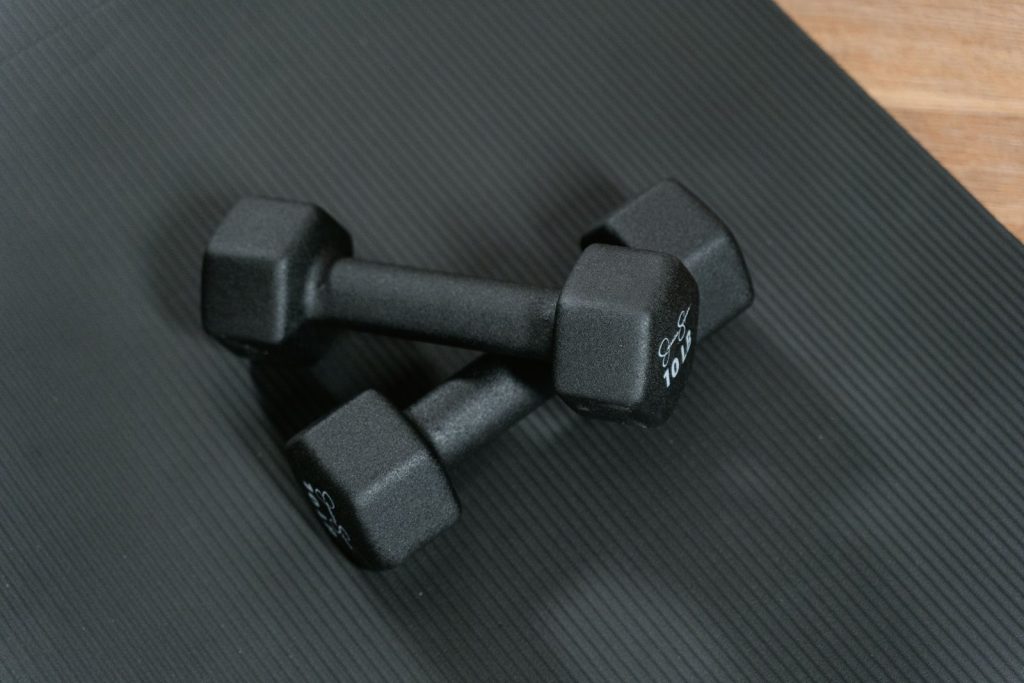
What do studies comparing light and heavy weights show?
A 2017 meta-analysis of 21 studies found similar muscle-growth results with lower and higher loads, while gains in one-repetition maximum strength favored higher loads. An important condition: the included protocols took sets to momentary muscular failure. The findings therefore should not be translated into “a few effortless repetitions work just as well.”
A broader 2023 network meta-analysis likewise found that different resistance-training prescriptions promoted muscle growth, with higher loads most favorable for strength. Its comparisons involved combinations of load, sets, and frequency; the load number alone was not the entire program.
What counts as a light weight?
The same dumbbell can be heavy for one person or exercise and light for another. A label such as “5 lb” identifies its mass, not the effort required from every user. A one-rep max expresses maximum performance for a specific lift, which is why research often describes loads as a percentage of that value.
| Description | What is missing? |
|---|---|
| “I used light dumbbells” | The exercise and the person’s capacity |
| “I completed 15 reps” | How challenging the set was |
| “15 reps, with a few more possible” | A more useful effort estimate, though still subjective |
For a starting point, read how to choose your first dumbbell weight. You do not need to test a maximum merely to begin keeping a useful training record.
Does that mean every light-weight set must reach failure?
No single study condition becomes a mandatory instruction for every workout. The failure condition above matters when interpreting that review, while the broader question of whether failure is required has its own evidence. Our guide to training to failure separates a challenging set from a failed repetition.
Follow the stopping rule in an appropriate program. Do not continue an exercise through pain or abandon the intended movement simply to accumulate repetitions.
What if you only have one pair of dumbbells?
Start by recording which exercises those weights suit. They may offer a useful challenge for one movement and too little or too much for another. Write down the limitation instead of assuming all exercises should use the same prescription.
When considering progression, change a planned variable and record it. Different repetitions, range, or equipment can make two sessions less directly comparable. A home setup can be useful, but owning one load does not mean it will remain suitable for every exercise indefinitely.
Choosing a rep range
See our guide to how many reps to do for muscle growth for practical examples and the limits of the general guidance.
About this article: an introductory editorial draft. Not yet independently reviewed by a fitness professional.