Should You Peel Eggplant? Let the Skin and Recipe Decide
You do not always need to peel eggplant before cooking. Illinois Extension recommends deciding according to the recipe and the skin’s tenderness. Tough skin can remain chewy while the flesh has already become soft.
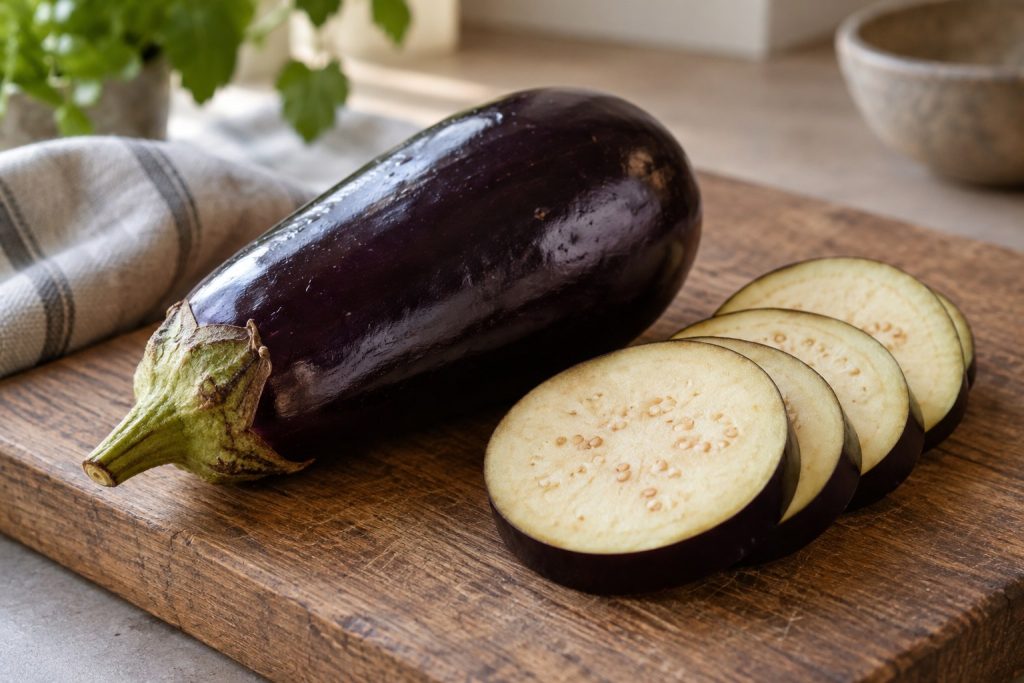
Check the texture you want
For a dish meant to include distinct skin-on pieces, select tender-skinned eggplant. A recipe seeking a smooth result may ask for peeled flesh. Follow that instruction rather than treating peeling as a universal rule.
Assess the actual eggplant
Older, tougher skin takes longer to soften. Simply cooking longer can overcook the flesh before the skin becomes pleasant. Peeling may be more practical when the skin feels tough and the recipe permits it.
Keep peeling separate from salting
Removing skin and salting cut flesh are different preparation choices. If your recipe calls for salting, follow its rinsing or drying instructions and account for residual salt. Peeling does not automatically replace that step.
Cut for the cooking method
Prepare pieces of similar thickness for the same pan or tray, and use a recipe suited to baking, grilling or sautéing. Do not assume a large peeled chunk and a thin skin-on slice need the same cooking time.
Sources
University of Illinois Extension.
Related reading
About this article: an introductory editorial draft. Not yet independently reviewed by a fitness professional.